


Stocks
October 15, 2026
Anthropic Revenue Hits $16.8B as TSMC Profit Jumps 69%, What Lies Ahead for AI Stocks?
Apple stock has finally held onto a $5 trillion valuation at the closing bell, joining Nvidia in an exclusive club. But the milestone comes with brand new questions about where its next phase of growth will come from. A planned Apple AI rollout in China could widen access to its services, while a courtroom agreement with OpenAI puts competing hardware ambitions under scrutiny. The shareholder returns behind those valuations offer another revealing comparison worth examining.
Also Read: Musk Eyes $100T SpaceX Barring Major World War as $800 Stock Target & Tesla Merger Talk Build
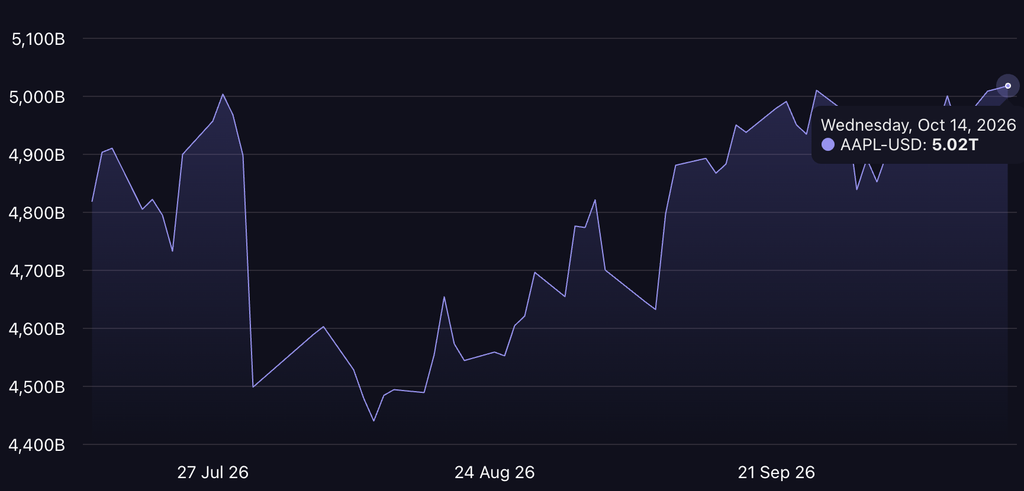
AAPL stock closed October 14 at $342.96, putting the Apple market cap at $5.02 trillion. The company had crossed $5 trillion during six previous trading sessions without finishing above it. The milestone gives investors a reason to compare Apple with Nvidia beyond their market values.
MarketCapOf’s return comparison tool shows that a hypothetical $5,000 investment in Apple over its January 1–October 15, 2026 window would be worth $6,342.56, a gain of 26.85%. The same starting amount in Nvidia would reach $5,846.57, up 16.93%.
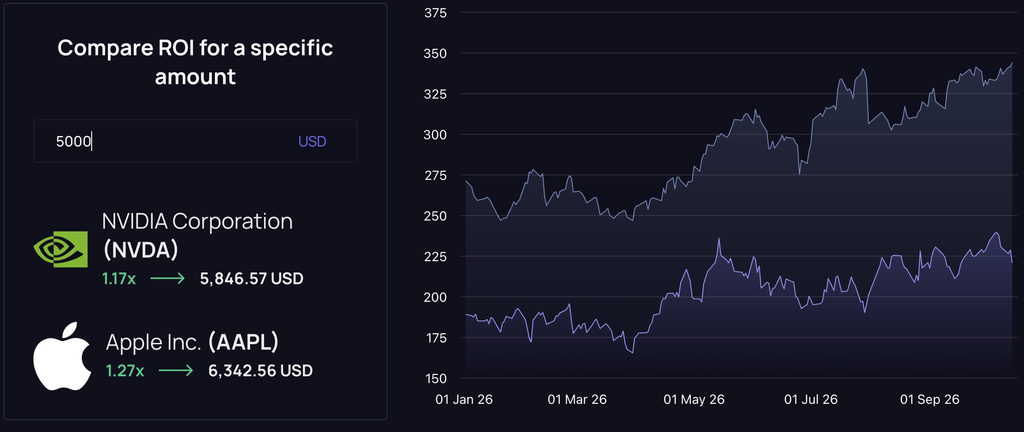
Apple therefore generated $495.99 more in the comparison. Both investments gained, but Apple delivered the stronger return over the selected period. Those historical results provide context for the rally without establishing which stock will perform better next.
Apple plans to bring Apple Intelligence to mainland China in December through iOS 27.3. The initial offering would include features introduced in the US two years ago.
The newer Siri AI assistant and other features announced this year would be excluded, limiting how much of Apple’s latest AI experience reaches Chinese customers.
Earlier launch targets slipped during the regulatory approval process. Apple received preliminary clearance in July and subsequently held further discussions with Chinese officials. December remains a reported target, rather than a publicly confirmed release date.
Also Read: CoreWeave Stock Forecast as $35B Debt Raises Default Concerns
The Apple OpenAI lawsuit concerns the confidential information behind another potential growth market, which AI hardware.
At the October 14 hearing, OpenAI agreed not to use trade secrets Apple alleges former employees took to the startup. The agreement also requires forensic images of 14 employees’ devices,
OpenAI denies wrongdoing and has separately alleged that an employee who joined Apple took confidential product files. Apple says it found no evidence supporting that accusation. The claims remain disputed as both companies pursue consumer devices that could bring their AI ambitions into more direct competition.
Also Read: Bitcoin Price Falls Below $83K After CPI as Whale’s $42.5M Short Draws Attention

Written by Sahana Kiran
Sahana Kiran has been covering financial markets since 2019, with a focus on cryptocurrencies, fintech, and the geopolitical events shaping them. She previously reported for AmbCrypto and Watcher Guru, and now writes for MarketCapOf.