





Markets
October 7, 2026
Cardano Price Climbs 42% Amid 413 Whale Transfers and Programmable Token Launch
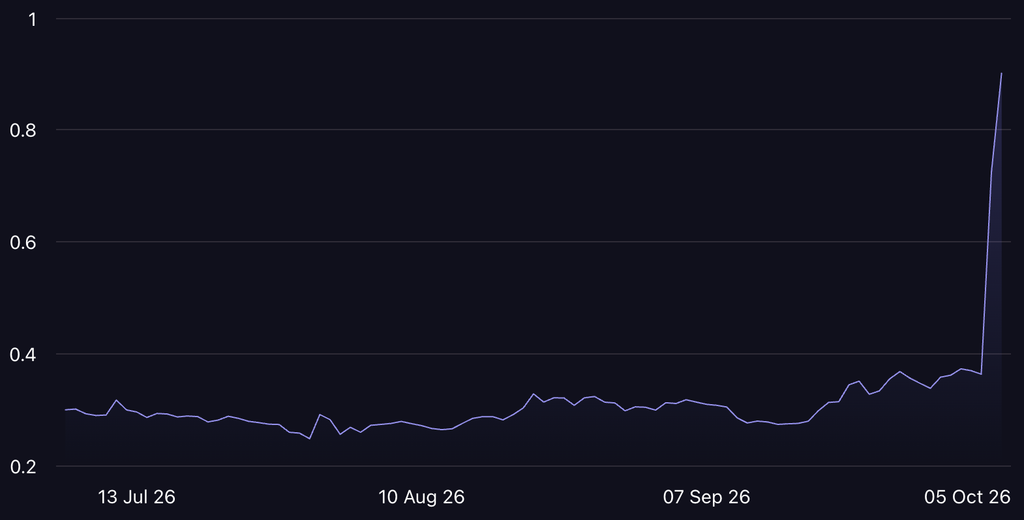
iExec RLC surged roughly 120% over 24 hours earlier on October 6, putting the small-cap token among the day’s standout movers. At press time, MarketCapOf readings showed the asset at $1.02. Yet the rally has no confirmed project announcement behind it. A recent development involving Ethereum and private AI payments offers one possible explanation.
Also Read: NEAR Surges Over 80% as Hyperliquid Launch Sparks Fresh Price Predictions
The MarketCapOf price chart puts the scale of the breakout in view, showing iExec RLC’s abrupt climb toward $1 after its earlier trading range.
The potential catalyst emerged five days earlier. On October 1, the Ethereum Foundation introduced zkAPI, built with the Open Anonymity Project to separate payments for AI and other API services from users’ identities. Users fund a vault and authorize spending through zero-knowledge proofs.
This launch provides a possible backdrop for buying in privacy-focused AI tokens. iExec operates in a related field, with infrastructure for confidential computing. Its documentation explains that RLC is used to access computing resources, secure off-chain computation, and monetize assets such as data and AI models.
The connection remains indirect, as zkAPI does not mention iExec. iExec’s X account and Telegram channel also showed no announcement tied to the move, making privacy-AI rotation a plausible explanation rather than a confirmed catalyst.
Also Read: Nvidia Nears $6T Market Cap as DBS Says AI Stocks Remain Far From Bubble Territory
Derivatives activity helps explain how the rally accelerated. Earlier CoinGlass readings showed approximately $1.47 billion in 24-hour futures turnover against $96.59 million in spot volume. CoinGecko displayed $495.22 million in perpetual open interest against an $88.94 million market cap, approximately 5.57 times the token’s valuation. Trading volume reached $340.03 million, roughly 3.82 times the market cap.
In addition, there were $7.29 million in short liquidations and $2.80 million in long liquidations. Forced buying to close bearish positions can push prices higher, supporting the view that a leveraged short squeeze amplified iExec RLC’s price rally.
NEAR Protocol provides a useful benchmark as both these tokens reside in the AI category. But their valuations are far apart, even after iExec RLC price’s rally.
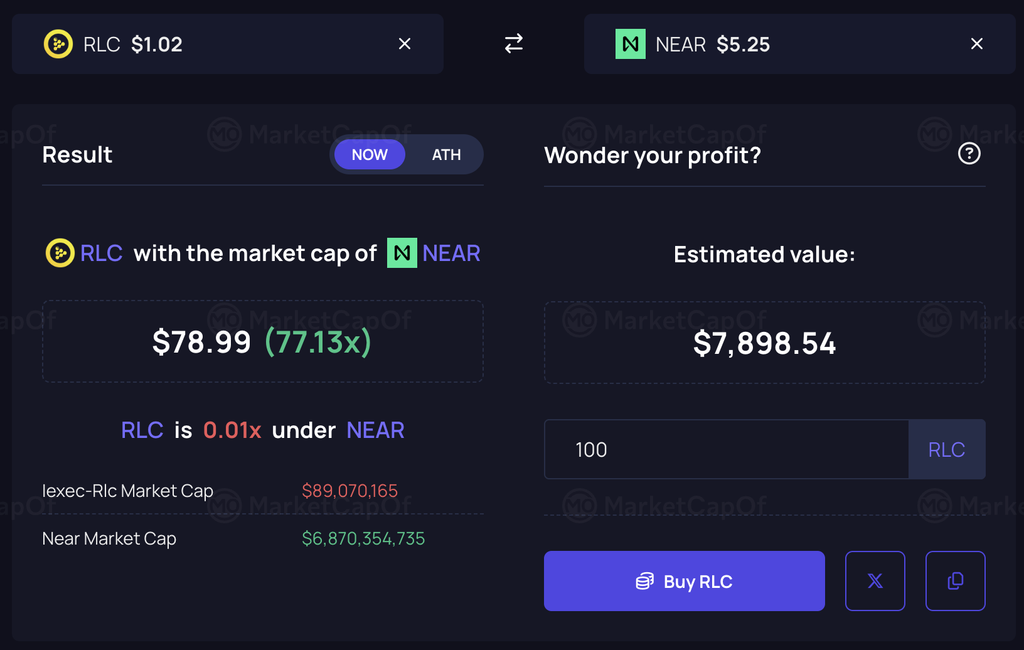
MarketCapOf’s Market Cap Calculator puts RLC at $78.99 if it carried NEAR’s $6.87 billion valuation, a 77.13x jump from the price used in the calculation. At that level, 100 RLC would be worth about $7,898.54. It should be noted that this is a thought experiment built on the tool’s circulating supply, not a forecast.
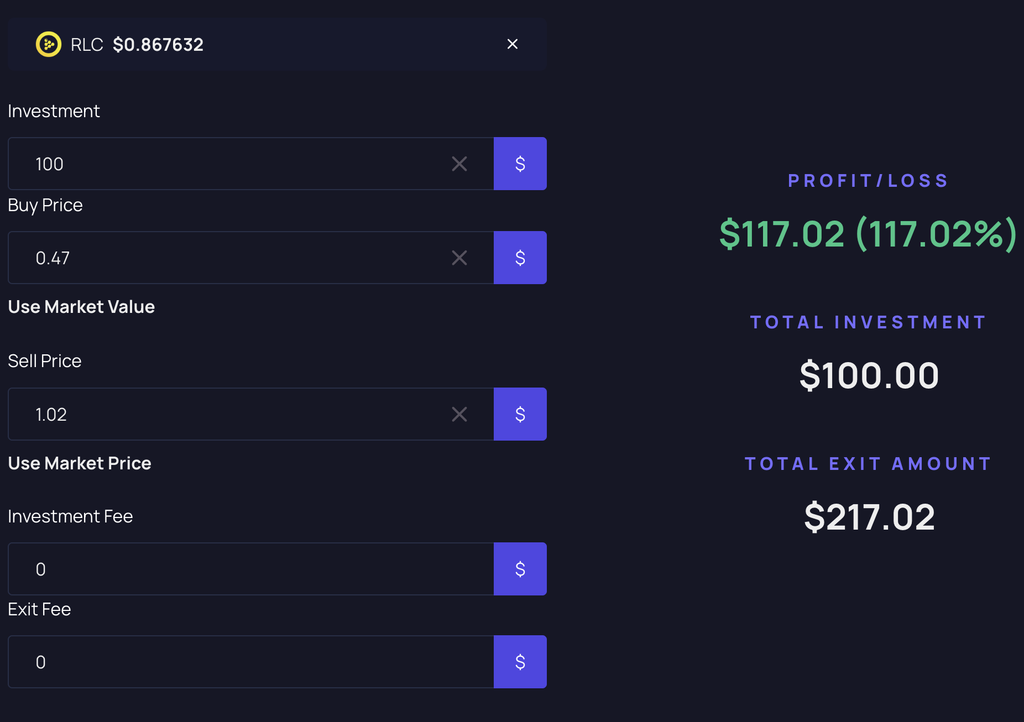
If an investor put $100 into RLC at yesterday’s price of $0.47 and sold at $1.02. MarketCapOf’s Crypto Profit Calculator puts that position at $217 on exit, a $117.02 profit or 117.02%, with fees set to zero.
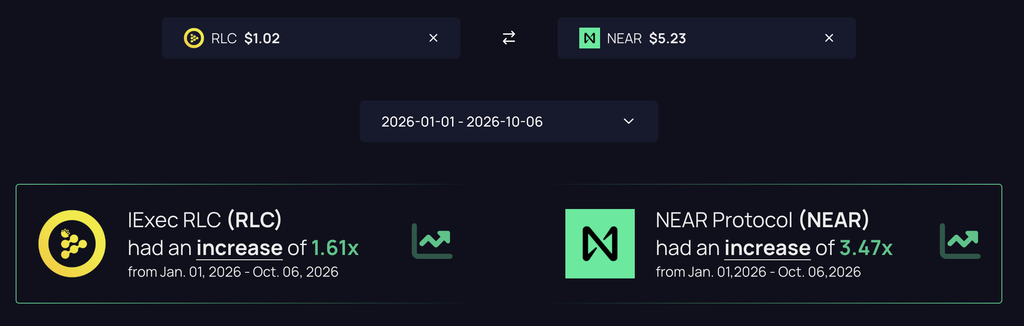
From January 1 to October 6, MarketCapOf’s ROI Calculator shows RLC at roughly 1.61x its starting value and NEAR at 3.47x. That works out to gains of about 61% and 247%. So despite RLC’s wild day, NEAR is well ahead for the year.
Without an official catalyst, RLC’s rally appears driven by the privacy-AI narrative and heavy leverage. With open interest above five times its market cap, sharp swings in either direction remain likely.
Also Read: Is ZEC Ready to Rally as Grayscale ETF Inflows Reach $233M With 3-for-1 Split Ahead?

Written by Sahana Kiran
Sahana Kiran has been covering financial markets since 2019, with a focus on cryptocurrencies, fintech, and the geopolitical events shaping them. She previously reported for AmbCrypto and Watcher Guru, and now writes for BlockNow.