



Stocks
November 6, 2026
What Could $1000 In AMD Become By 2030 After A Record $13.4B Quarter
An ugly session on Wall Street has pulled Nvidia stock below $190, just days before another closely watched earnings report. NVDA stock sank 9.26% on November 5, losing ground faster than the rest of the market. It was seen breaking a key long-term technical measure. Yet a reported plan involving Apollo Global Management points to another way Nvidia might keep its AI expansion moving. The question for investors now is if that opportunity can matter before the next set of numbers arrives.
Also Read: Michael Saylor Predicts 3-Year Bitcoin Bull Run as US Midterms Reshape Crypto Outlook
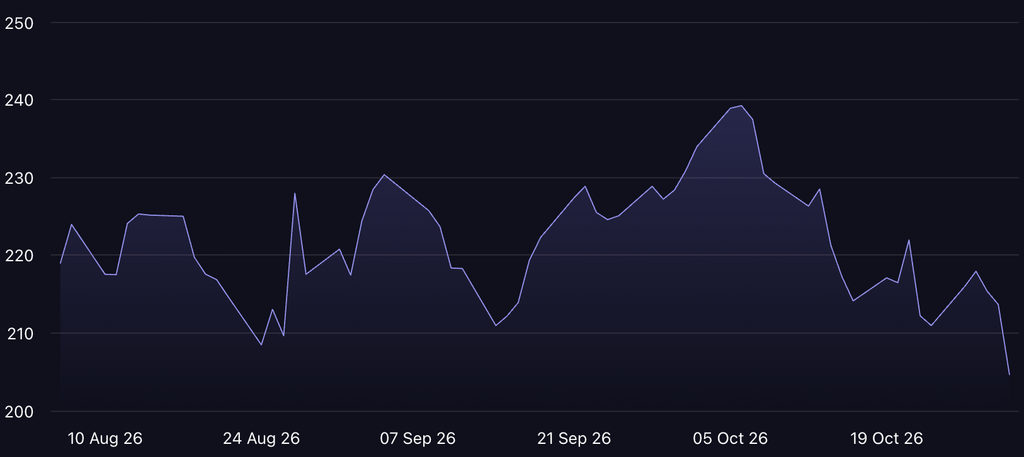
Nvidia closed Thursday at $181.60, shedding $18.53 in a single session. The decline exceeded the Nasdaq Composite’s 5.52% drop and pushed shares below their 200-day moving average of approximately $204.
The technical picture has deteriorated considerably. Analyst Ali Martinez identified $170 and $150 as possible downside targets following the breakdown below $190.
Concerns about an AI bubble have also resurfaced as investors question the pace of spending on data centers. But the latest analyst ratings suggest Wall Street hasn’t abandoned Nvidia. On November 2, Melius Research maintained its Buy rating while cutting its price target from $420 to $315.
Also Read: Polygon Jumps 9% Amid $6.5M Binance-Polymarket Hard Fork Plan, Zcash Rallies 8%
Nvidia could be looking for a way around one of the industry’s biggest obstacles. This includes finding enough power and space for new AI infrastructure.
According to latest reports, the chipmaker has approached Apollo about converting existing Brightspeed telecommunications buildings into smaller AI data centers. The proposed network could span 20 US states, potentially providing around one gigawatt of power capacity.
Existing facilities could help Nvidia deploy computing equipment without waiting for entirely new buildings. But the Nvidia-Apollo deal remains under discussion.
The companies already have a financial relationship. In August, Nvidia announced partnerships with Apollo and five other institutions aimed at mobilizing over $500 billion in third-party AI infrastructure financing over time.
Meanwhile, a MarketCapOf comparison puts Apollo’s (APO) market capitalization at $68.41 billion against Nvidia’s $4.93 trillion.
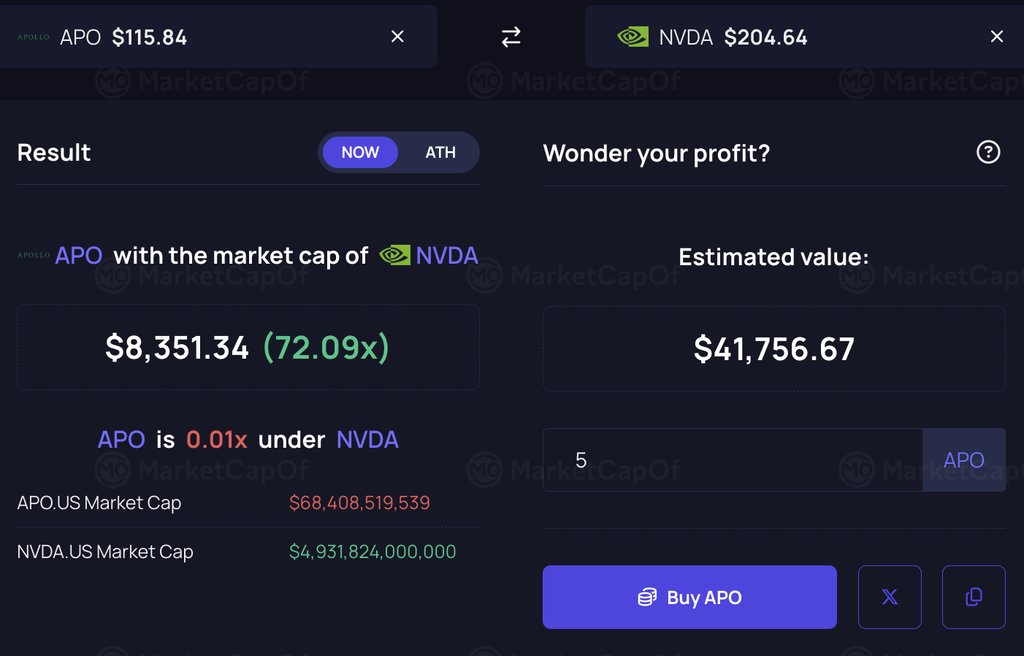
That represents a 72.09x valuation difference. Apollo would theoretically trade around $8,351 per share at Nvidia’s market capitalization, although the calculation is hypothetical and does not represent a realistic price forecast.
The next Nvidia earnings report could determine whether investors regain confidence. Nvidia reported fiscal Q2 revenue of $96.22 billion, up 106% annually. Adjusted earnings reached $2.22 per share, beating the $2.09 consensus estimate.
For Q3, Nvidia expects approximately $108 billion in revenue. Reports put analyst expectations at $108.8 billion and $2.47 in adjusted EPS.
The Nvidia valuation has also become more interesting following the selloff, with its forward P/E near 13x.
For the Nvidia stock price prediction, recovering $200 would require approximately 10.1% upside from Thursday’s close. A fall to $170 would mean another 6.4% decline.
The NVDA stock forecast ultimately rests on whether earnings confirm that AI demand remains strong enough to support further expansion. Nvidia’s financial growth supports a recovery case, but another weak outlook could leave shares vulnerable. The Apollo discussions may offer an opportunity. November 17 will provide a clearer test of whether investors are willing to pay for it.

Written by Sahana Kiran
Sahana Kiran has been covering financial markets since 2019, with a focus on cryptocurrencies, fintech, and the geopolitical events shaping them. She previously reported for AmbCrypto and Watcher Guru, and now writes for MarketCapOf.