


Stocks
October 16, 2026
Tesla Stock Faces $400 Milestone as Musk Unveils SpaceX Roadster, How Much Higher Can TSLA Rally?
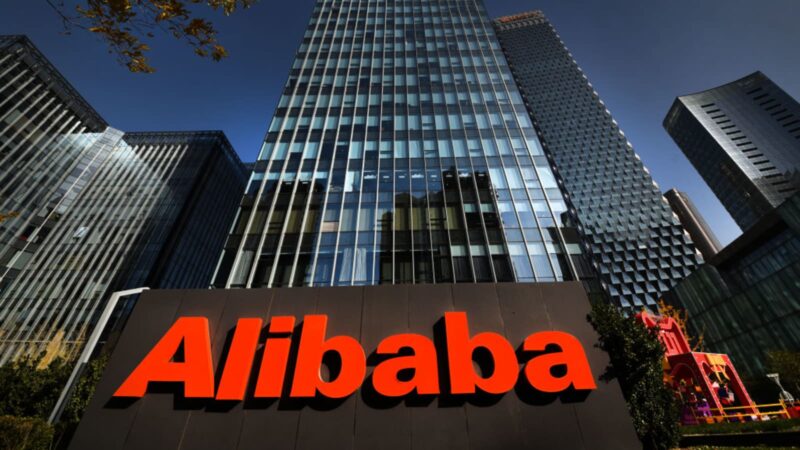
Alibaba stock took a sharp hit on Monday after the company turned to investors for $10.2 billion to fund its AI expansion. The raise comes just days after Alibaba reported a 75% drop in quarterly profit. Meanwhile, its spending on chips and computing infrastructure keeps climbing. The company clearly sees AI as its next major growth engine, but shareholders are now being asked to help finance that bet before the returns are fully visible.
Also Read: Gold Futures Break Above $4,700 as China’s Gold Buying Meets Fresh Dollar Concerns
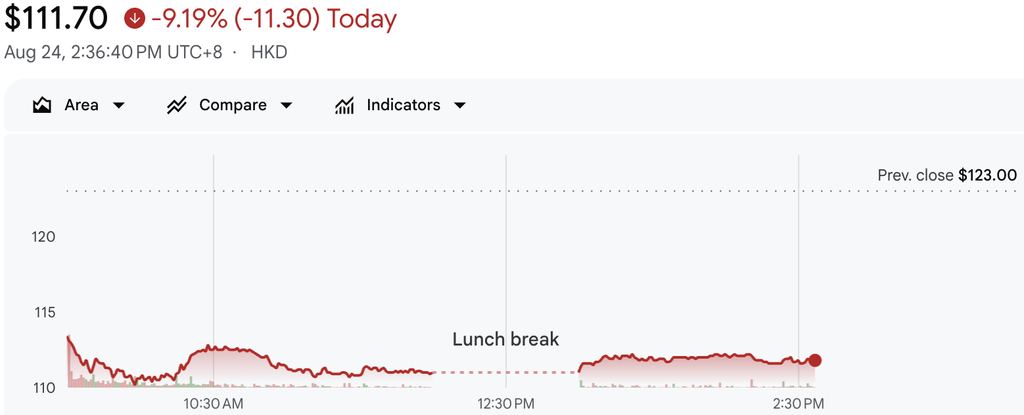
The Alibaba stock saw a nearly 10% drop over the past 24 hours. Currently, the stock is trading at $111.80. Alibaba is issuing 710 million new shares at HK$112.70 each, an 8.4% discount to its previous Hong Kong closing price. The deal is the largest primary follow-on offering by a Hong Kong-listed company, and shares fell as much as 10% after the announcement.
The discount is the immediate headache for existing shareholders. More shares mean more dilution. But the lower issue price gives new investors a cheaper entry point.
But there was plenty of demand for the deal. The order book reportedly attracted around $28 billion. This includes roughly $6 billion from long-only and sovereign investors.
Alibaba says all net proceeds will go toward expanding its full-stack AI capabilities, including chips, infrastructure and models. This is a continuation of a much larger spending plan. The company committed at least 380 billion yuan to AI and cloud infrastructure over three years.
The concern for investors is the size of the bill. Alibaba’s June-quarter net profit dropped 75% year over year. Meanwhile, capital expenditure jumped 75% to 67.7 billion yuan. At the same time, AI and cloud revenue rose 45% to 48.44 billion yuan. This shows that demand is growing along with spending.
This split is becoming central to the Alibaba stock. The AI business is gaining traction, but investors still need evidence that the investment can produce attractive returns.
Also Read: Walmart Stock Cracks 9% as Weak Sales Signal Trouble Beyond the Checkout
Michael Burry has also stepped away from Alibaba. This moves his position into JD.com. He criticized the new share issuance and said Alibaba would need to fall by roughly half before he would consider buying back in.
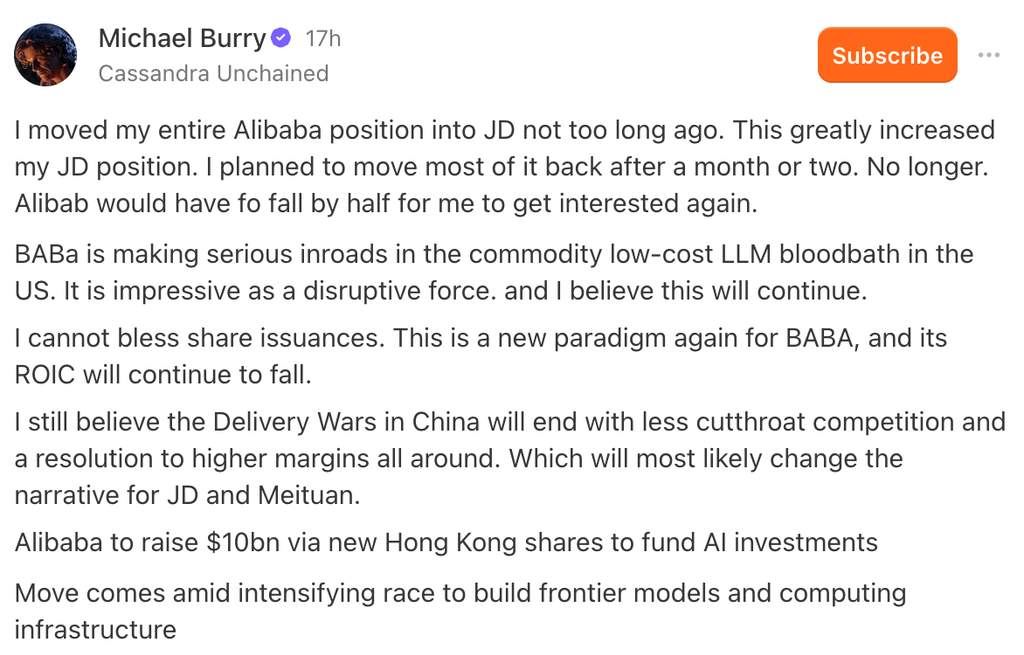
Burry still acknowledged Alibaba’s progress in AI, which makes his decision more interesting. The debate around Alibaba AI is no longer whether the company is investing heavily. It is whether that spending will eventually generate enough profit to justify the dilution and enormous capital requirements.
Also Read: Bitcoin Price Rally Builds as CFTC Vows Crypto Rules and Bitcoin ETFs Pull $517M

Written by Sahana Kiran
Sahana Kiran has been covering financial markets since 2019, with a focus on cryptocurrencies, fintech, and the geopolitical events shaping them. She previously reported for AmbCrypto and Watcher Guru, and now writes for MarketCapOf.