



Stocks
September 25, 2026
Tesla Opens Semi Factory With 50,000-Truck Goal as Stock Eyes $389
SanDisk stock has gone from one of the market’s hottest memory trades to a five-session slide, even as Wall Street keeps getting more bullish on the industry underneath it. The SanDisk stock price closed at $1,519.97 on Wednesday, down nearly 14% from its September 9 close. Yet Citi is warning the NAND shortage could worsen through 2031, while a Goldman Sachs model points to far larger SanDisk revenue by fiscal 2028.
Also Read: Two Crypto Bills Advance in House as Gillibrand Says CLARITY Act Fight Is Not Over
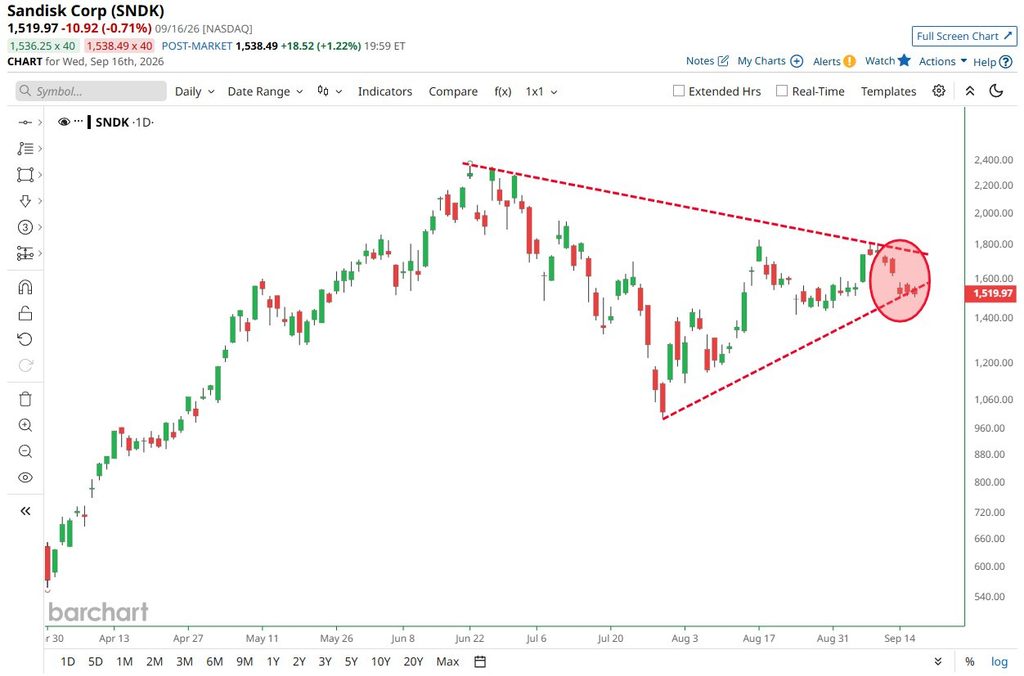
SanDisk dropped another 0.7% on September 16, extending a run of losses that began after shares closed at $1,764.17 on September 9. The stock has now fallen in five straight sessions, matching the longest losing streak in its tracked history.
The pullback has been sharp, but it follows an extraordinary year. SanDisk is still up more than 500% in 2026, helped by a huge improvement in pricing and demand from data centers.
Its own numbers show why investors chased the stock so aggressively. Fiscal 2026 revenue reached $20.25 billion, up 175%, while data center revenue jumped 437% to $5.15 billion. Fourth-quarter sales alone came in at $8.97 billion, up 51% sequentially.
Also Read: SpaceX Stock Drops to $144 as Musk Hints at Tesla Merger, Cathie Wood Sees $10T Starship Revenue
Citi suggests the memory squeeze may have much further to run. The bank expects AI models that continuously absorb new data to put more pressure on both DRAM and storage demand. For NAND specifically, Citi sees demand rising 29% in 2027 and 33% in 2028, versus supply growth of just 21% and 25%. This leaves projected supply-demand deficits of 6.1% and 5.5%, respectively. Citi expects memory undersupply to worsen through 2031 and includes SanDisk among its preferred memory names.
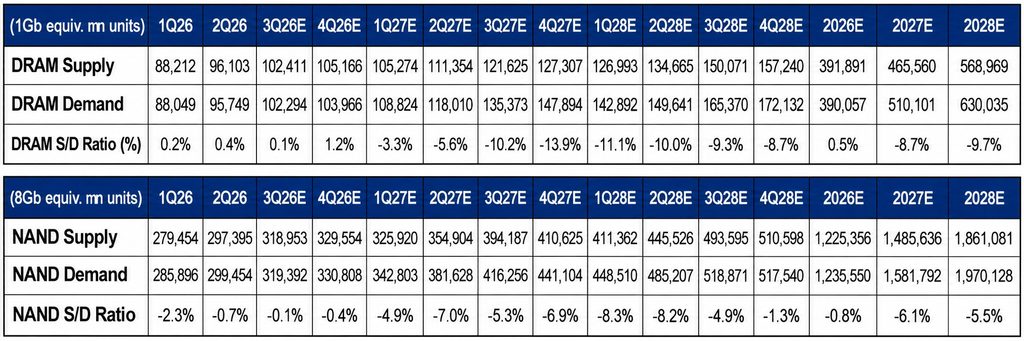
It matters because SanDisk has already committed a large portion of future supply under long-term customer agreements. Roughly two-thirds of fiscal 2028 bit supply is now covered by those deals.
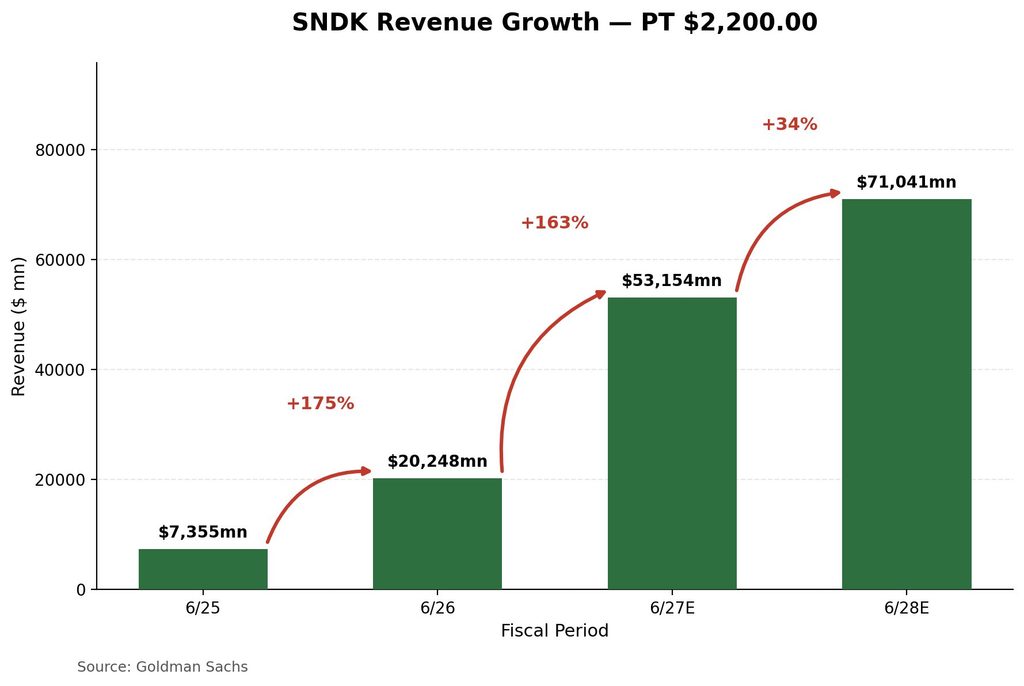
Goldman Sachs is also modeling a much bigger business. Its estimates put SanDisk revenue at roughly $71.0 billion in fiscal 2028, compared with $20.25 billion in fiscal 2026. The same model has EPS approaching $285 for that year.
SanDisk itself is more conservative. Management is targeting mid-to-high teens annual revenue growth from fiscal 2028 through 2030, alongside roughly 80% gross margins and 75% operating margins.
So the near-term chart looks bad, but the argument behind the stock has not disappeared. The market is now testing how much of that memory boom was already priced in.
Also Read: Gold and Silver Rally Ahead of Fed Decision as Markets Watch for Policy Signals

Written by Sahana Kiran
Sahana Kiran has been covering financial markets since 2019, with a focus on cryptocurrencies, fintech, and the geopolitical events shaping them. She previously reported for AmbCrypto and Watcher Guru, and now writes for BlockNow.