







Business
November 9, 2026
Can Nvidia’s $108B Revenue Outlook Lift Its Stock Despite the Jensen Huang Probe?
Coinbase has secured a full US trust charter, but COIN stock was still lower before Monday’s opening bell. The approval gives its custody business a federal framework while Binance disputes a claim involving 335 million records. Coinbase spent months meeting the regulator’s conditions. Now it can offer institutions another reason to consider its custody services.
Also Read: Trump Memecoin Falls 26% as Richard Blumenthal Sets January 4 Senate Probe Deadline
The OCC’s licensing record lists Coinbase National Trust Company’s charter as effective November 6, following conditional approval on April 2.
Coinbase said it spent the intervening months building compliance systems, hiring staff and completing regulatory reviews. The Coinbase trust charter puts its custody business under federal supervision and supports related transaction services.
The bank approval has limits. Coinbase will operate a specialized trust institution, rather than a commercial bank accepting ordinary retail deposits and making loans. Vice Chairman Ryan VanGrack said in a statement,
“We’ve spent years asking for clear rules and rigorous oversight.”
It should be noted that this decision follows Ripple’s final trust-bank approval in October, extending the entry of crypto companies into federally supervised banking.
Coinbase stock traded at $131.89 at press time, down 2.13% from its previous close of $134.76. The premarket move alone does not establish how traders valued the charter announcement.
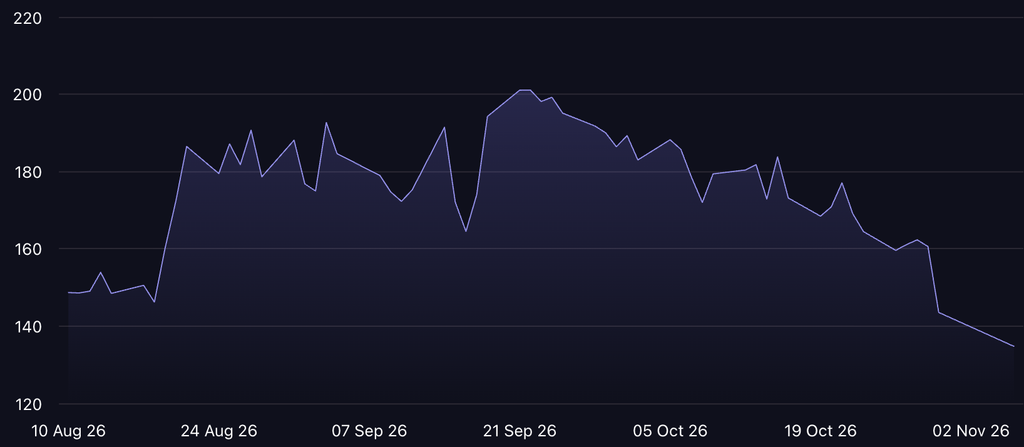
The potential advantage is commercial. The federal supervision could make Coinbase custody more attractive to institutions choosing where to hold digital assets. New client agreements and services would give investors evidence of how Coinbase is using that status.
Also Read: Intel vs TSMC: Does Lip-Bu Tan’s $19.7M Share Buying Make INTC a Better Bet?
The industry’s route into banking also faces opposition. The Independent Community Bankers of America sued the OCC in October, arguing that its trust-chartering framework exceeds the regulator’s authority.
The Binance data leak claim involves an advertisement attributed to ShinyHunters, offering 335.9 million lines of purported Binance information for $900,000.
Binance said its preliminary investigation found no evidence of compromised systems or customer data connected with the listing. It described the offer as a likely scam while continuing to investigate.
The exchange said claims involving plaintext passwords and private keys for external wallets conflicted with its security practices. Brandefense’s research also treated the advertised data as unverified. The line count does not establish how many users, if any, were affected.
Coinbase’s charter gives it a stronger regulatory pitch, but it does not prove that customers are leaving Binance or that Coinbase is immune to security failures. For COIN investors, the more convincing follow-through would be institutions choosing Coinbase and new services launched under the charter. The approval gives the company an opening, and winning that business still takes work.
Also Read: Gold Market: Goldman Sachs Cuts 2026 Target to $4,150. What’s Behind the Move?

Written by Sahana Kiran
Sahana Kiran has been covering financial markets since 2019, with a focus on cryptocurrencies, fintech, and the geopolitical events shaping them. She previously reported for AmbCrypto and Watcher Guru, and now writes for MarketCapOf.