






Defi
October 20, 2026
TRON TVL Hits $5.7B and Stablecoin Activity Surges, Can TRX Rally in 2026?

Aave is gaining market attention as Citi’s new research highlights the growing importance of tokenization and collateral mobility in financial markets. The report explores how Aave could play a role in this shift as traditional finance moves toward onchain infrastructure. How is Aave positioning itself in the tokenization market, and could these developments help AAVE rally?
Also Read: Crypto Vaults Grow From $4B to $10B as Investors Chase Higher Yields Amid Rising Risks

The new Citi Research focuses on evolving tokenization dynamics in digital finance emphasizing on how assets supporting tokenization can become more useful in day to day finance. For Aave, the idea is simple. Financial institutions hold assets that can be used as collateral to borrow money or support trades. Tokenization helps in movements of these assets in a digital plain. The research adds how Aave’s lending infrastructure may benefit from such change if tokenized assets become useful within onchain lending markets.
“As tokenized assets, stablecoins, and institutional participation move closer to the financial mainstream, Aave is potentially positioned as a decentralized collateral mobility protocol. Aave V4, Horizon, GHO, and related initiatives all point in the same direction: building the intersection of collateral, liquidity, and financing. More simply, if tokenization determines what assets live onchain and stablecoins emerge as a default settlement substrate, protocols like Aave may help determine how those assets are financed, leveraged, pledged as collateral, and integrated into capital markets. Our note reviews how Aave works, where it fits in the digital asset infrastructure stack, why its role could potentially expand, and how value-accrual models seek to align network growth with investment returns.“
The core of Citi Research focuses on flexible collateral management as an important part of tokenization. Aave already has a foothold in this market.
In September Aave V4 introduced support for seven Coinbase tokenized US technology stocks as collateral for borrowing USDC on Base. The stocks include tokenized versions of Apple, Amazon, Alphabet, Meta, Microsoft, Nvidia and Tesla
Also Read: HYPE Rallies 40.5% in Q3 as Grayscale Buying Defies ETF Outflows
While it’s extremely difficult to answer whether Aave rally momentum will surge ahead or not, However if Aave becomes a leading chain for collateral mobility,then its price prospects may certainly improve.
According to CoinCodex’s Aave price prediction, the token could reach $263 by the end of 2026, representing a projected gain of 42.64% from the reference price displayed on its forecast page. The platform also projects prices of $452.14 by 2030, $746.05 by 2040, and $1,103.14 by 2050. These are model-based estimates and may change with market conditions.
However crypto markets are subject to change hence user discretion becomes necessary before making any investment related decision.
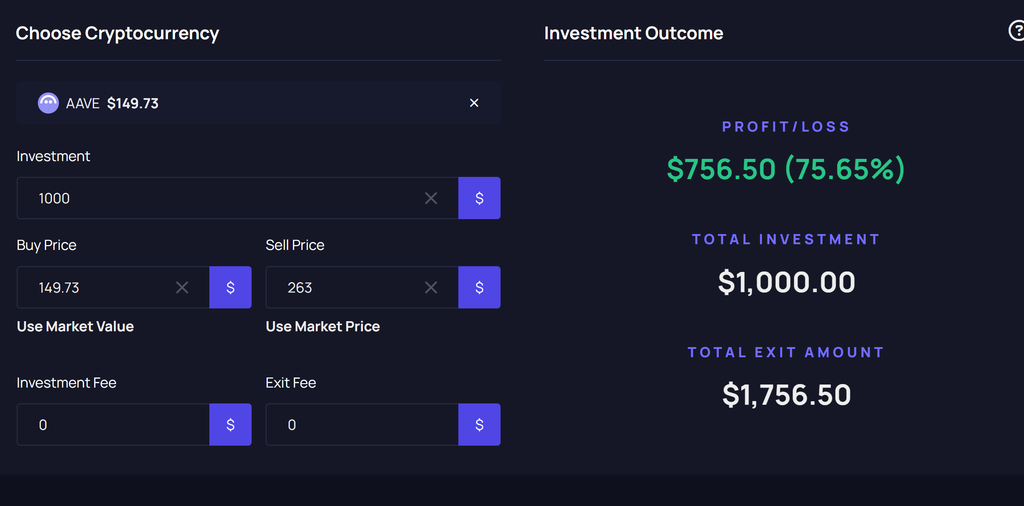
MarketCapOf’s crypto profit calculator estimates that a $1,000 investment at the current price of $149.73 per AAVE could generate a profit of $756.50 if the token reaches $263. This would bring the total investment value to approximately $1,756.50, representing a potential return of 75.65%, excluding fees and taxes.
Also Read: XRP Eyes $5 First, but ETF Outflows Challenge the $15 Bull Run

Written by Juhi Mirza
Juhi Mirza is a crypto journalist and writer covering digital assets, blockchain, markets, and emerging trends in the Web3 industry.