







Stocks
October 8, 2026
Palantir Stock Gets Goldman’s $230 Target as Zeta Expands AI Push
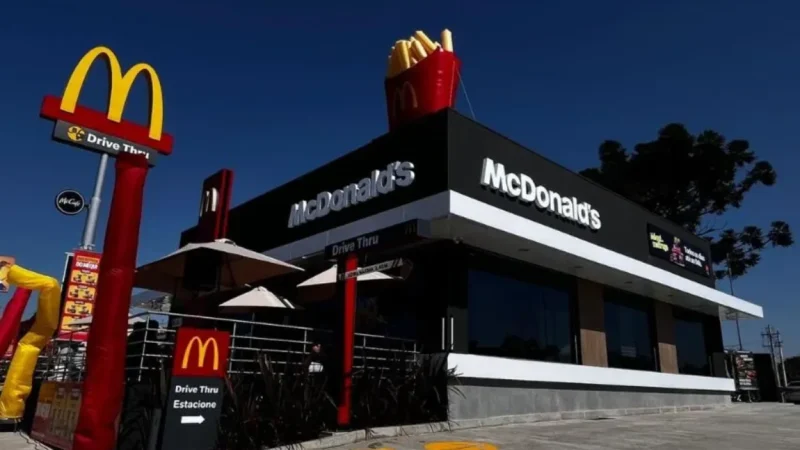
McDonald’s stock is struggling to find a floor, with shares heading toward an eighth straight weekly decline just as Treasury yields offer investors a stronger alternative. Inside its restaurants, the company is working through another pricing problem, how much customers will pay for a meal. A recent investigation into its AI-assisted recommendations has brought that question into focus.
Also Read: Bitcoin Price Gains 7% in September as Gold Falls 6%, Brandt Sees $600K
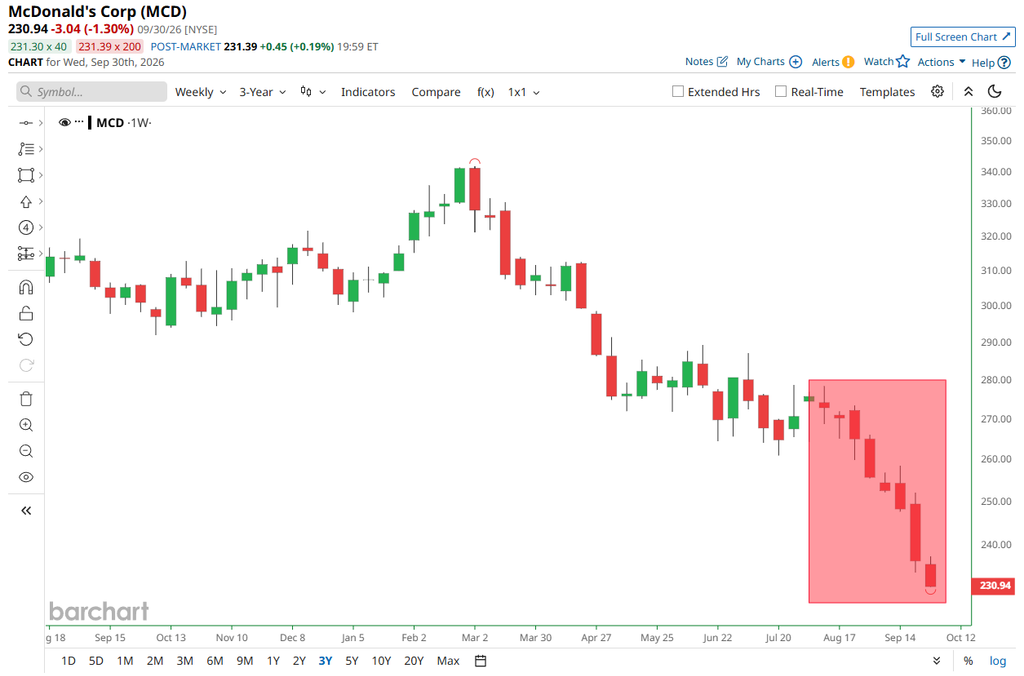
A recent post said MCD stock was on track for its eighth consecutive losing week, potentially its longest such run since the aftermath of the dot-com bubble. In addition, the stock saw a close of $230.94. The weekly streak remains unfinished until Friday’s close.
Amidst this, the Treasury comparison adds context. Federal Reserve data published through FRED put the 10-year yield at 5.26% on September 29, up from 5.11% on September 23. This is a 15-basis-point increase in less than a week.
Higher US Treasury yields give investors more income from government bonds, increasing competition for dividend-paying stocks. They can also weigh on equity valuations by raising the rate used to discount future earnings.
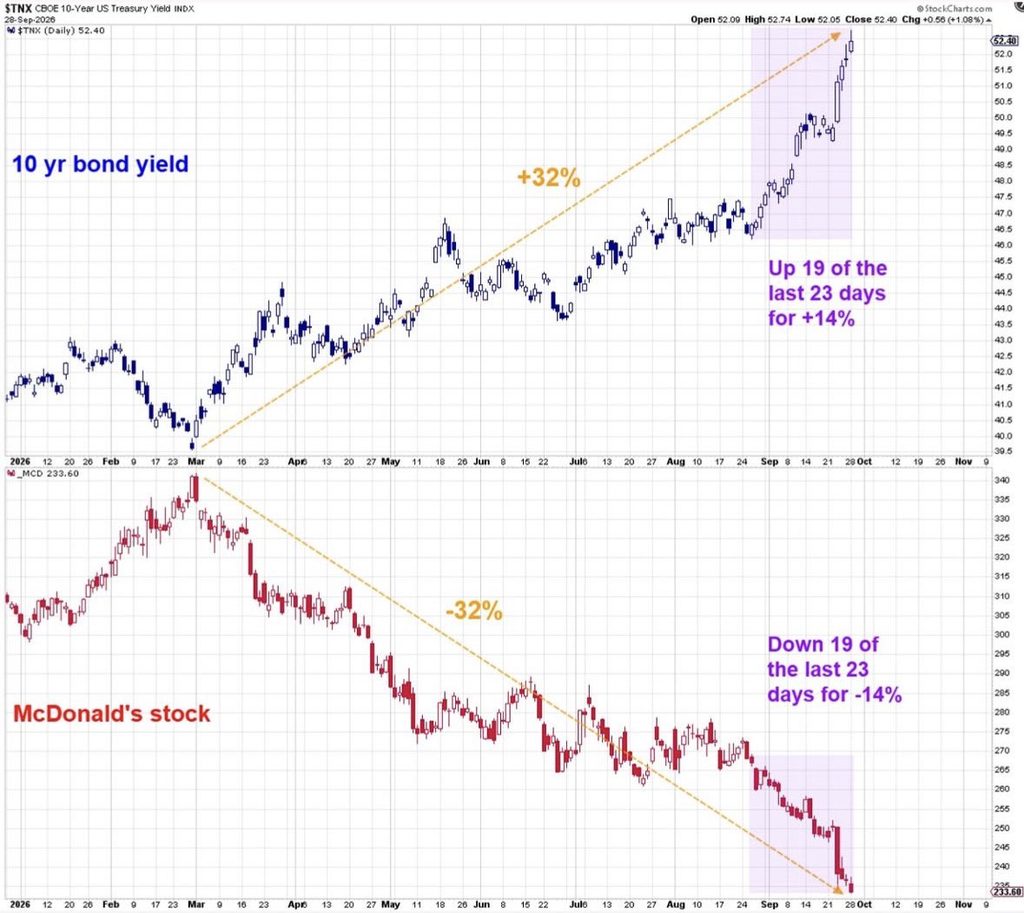
The comparison chart shows McDonald’s shares falling while yields rise. It is a useful illustration of the market backdrop, though matching moves over one period do not establish why investors sold the stock. Restaurant performance and spending plans still matter.
Also Read: Bitwise NEAR ETF Draws $35.5M as Price Rallies 86%, How High Can It Go in October?
It was reported that McDonald’s uses AI-powered tools to recommend prices based on restaurant-level conditions, including demand and competition. It highlighted a $5.69 Big Mac at one Fresno restaurant and a $6.89 price at another two miles away, a difference of roughly 21%.
The gap alone does not show that the technology caused the higher price. Franchisees make the final decision. In its response to the reporting, McDonald’s said “AI does not set the price of a Big Mac” and described its pricing tool as optional guidance.
A cheaper share price may draw buyers, but McDonald’s still needs customers to feel the same way about its meals. The next earnings report will offer a clearer test if its pricing decisions are helping restaurant profits without costing it visits.
Also Read: Apple vs. Amazon Stock as Rosenblatt Sees $303 AAPL and $360 AMZN

Written by Sahana Kiran
Sahana Kiran has been covering financial markets since 2019, with a focus on cryptocurrencies, fintech, and the geopolitical events shaping them. She previously reported for AmbCrypto and Watcher Guru, and now writes for BlockNow.