Best AI Stocks: NVDA Owns the Pipes, MSFT the Cloud, PLTR the Data – Which Do You Buy?
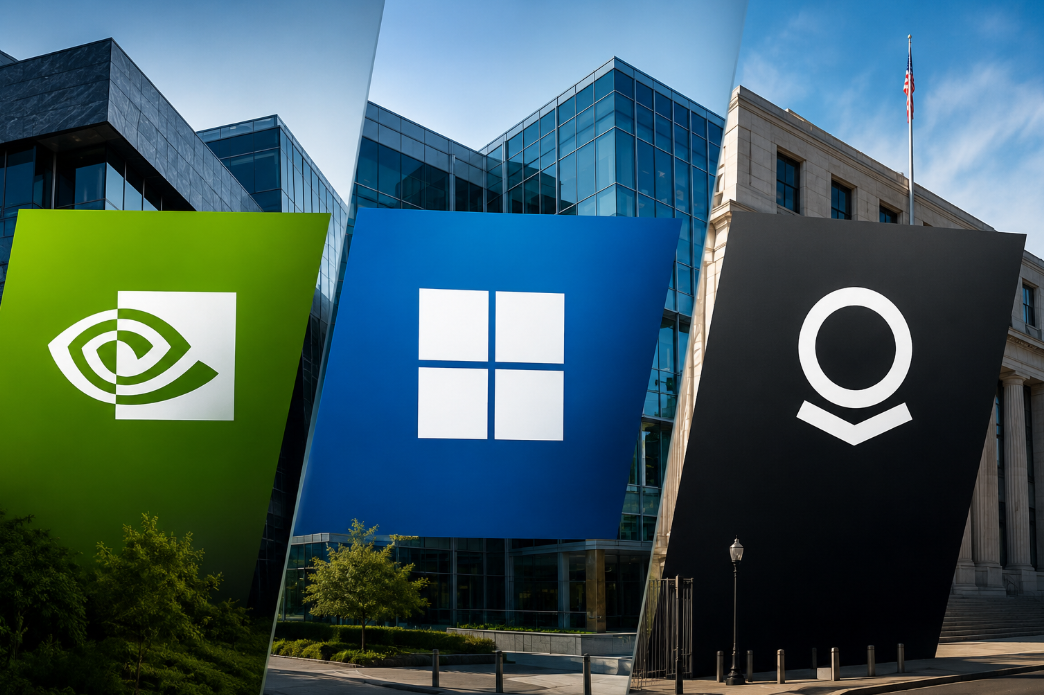
- The best AI stocks split into three types: infrastructure (Nvidia, TSMC, Broadcom) wins if AI keeps building, cloud (Microsoft, Alphabet, Amazon) wins if enterprises deploy AI at scale, and pure-play software (Palantir) wins if AI delivers measurable ROI for customers
- Nvidia anchors the infrastructure category with 85-90% of AI data center compute and a CUDA moat that competitors have spent billions trying t overcome, while Microsoft anchors cloud with Azure AI and GitHub Copilot across 1B+ users
- The framework question before buying any AI stock: which type fits your portfolio, what is your time horizon, and how much risk do you want on the pure-play software bet versus the more defensive infrastructure plays
Best AI stocks are not really all the same kind of bet, and that is the part most roundups just skip right over. Nvidia, Microsoft and Palantir keep showing up near the top of nearly every ranking of AI stocks, picked mainly for how much of each company’s revenue growth is now tied to AI and how dominant each one already is in its own corner of the market, and yet each one still makes its money in a pretty different way.
The Nvidia AI stock owns the physical layer that basically every AI model runs on. Microsoft, on the other hand, owns the cloud layer, which is where companies actually deploy AI once they decide to use it. The Palantir stock owns the software layer, the part meant to turn AI into a result somebody is willing to pay for again.
Also Read: TTD Stock Is Down 77% in Three Years as Wall Street Debates Whether It’s Finally Cheap
Why Market Cap Alone Doesn’t Answer The Question
As Forbes lays out in its own ranking of the best AI stocks for 2026, screeners built around the best artificial intelligence stocks tend to rank names by market cap or by one-year return, but neither number really explains why a stock belongs on a list of AI stocks to invest in in the first place.
Anyone building that list of AI stocks to invest in should sort each name into one of three groups first, and only then figure out how much of each one belongs in a portfolio, which is still the fastest way to answer what most people asking about the best AI stocks are really asking.
Three Types of AI Stock, Three Different Bets – Infrastructure, Cloud & Pure-Play Software

Most lists of the best AI stocks hand investors ten names in a slightly different order every few months, and then just move on. Splitting the best artificial intelligence stocks into three buckets works a bit differently, mainly because each bucket carries its own risk and its own reason for winning. Infrastructure earns money whether developers build on OpenAI, Google or Anthropic, since every one of them still needs chips to train and run their models regardless.
The Three AI Stock Buckets At A Glance
Click a bucket to see its anchor stock, revenue model, and risk level side by side.
Cloud earns money once a company actually turns on an AI workload and starts paying for the compute sitting behind it. Software, meanwhile, only earns money when AI produces something a customer is willing to write a check for again next quarter, which sets a much harder bar to clear. That last bucket is the hardest one to win over the long run, and it also carries the biggest downside if the bet does not end up paying off. Looking at the best AI stocks through this kind of lens makes it easier to spot which names on a broader list of AI stocks to invest in are actually competing with each other, and which ones are not really competing at all.
It also explains why a single ranking of the best artificial intelligence stocks rarely tells the full story, since a name near the top of one bucket can carry a completely different risk profile than a name near the top of another, even if one headline lumps both together under the same label.
1. Infrastructure – Nvidia Runs The Physical Layer
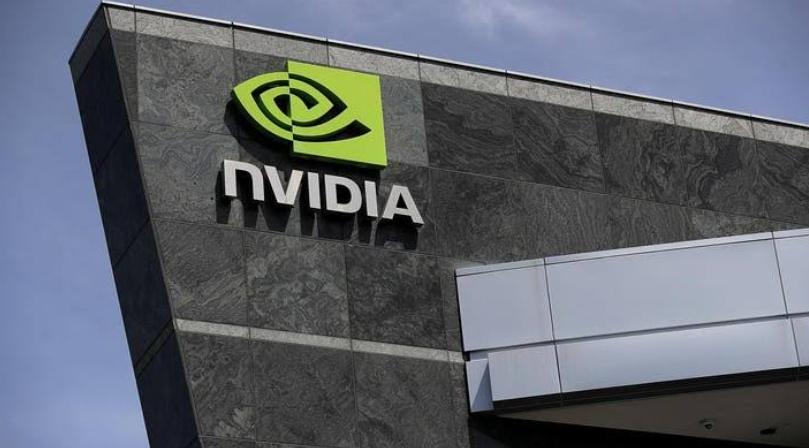
Nvidia (NVDA) is the AI stock most investors already own in some form, whether that is directly or through an index fund tracking the S&P 500. Among the best AI stocks built around physical infrastructure, Nvidia is still sitting furthest ahead, at least for now, and the Nvidia AI stock has held that spot for a while. Its GPUs and its CUDA software stack have become close to the default choice for training and running large language models, and rivals have spent billions trying to pry developers away from that stack without a whole lot of luck.
Nvidia’s data center segment helped push full-year sales to $215.9 billion in 2025, which was up 65% from the year before, with the company’s next-generation Rubin platform also lined up for the second half of 2026. Demand for its chips has kept outstripping supply, and that is usually the clearest sign a company sits at the front of a list of the best AI stocks tied to a single input that basically everyone else still needs. That kind of sustained demand is also why long-range forecasts for the stock tend to skew upward rather than flat, since analysts are pricing in years of continued buildout rather than a single strong quarter.
Nvidia’s Bull Case, Card By Card
Click any card to flip it and see the case for, and against, the Nvidia AI stock.
Analyst coverage generally rates Nvidia’s moat as wide, built on its hardware lead plus the CUDA software layer that keeps developers locked into its ecosystem.
Even with a wide moat, coverage typically flags very high uncertainty, since the stock’s fortunes are tied almost entirely to the pace of AI infrastructure spending.
Beyond data centers, Nvidia is pushing into autonomous vehicles and robotics. It’s a small slice of revenue today, but one of the few growth levers that isn’t just more GPUs.
AMD, Intel and hyperscalers designing their own AI chips are the clearest long-term threat, since each one chips away at demand for Nvidia’s GPUs even if none unseats it outright.
None of these four cards changes with the calendar, they’re the structural bull-and-bear case that keeps the Nvidia AI stock debate going regardless of which quarter you’re reading this in.
Why Nvidia Anchors The List Of Best AI Stocks
The Nvidia AI stock does not really need one single AI application to succeed in order to keep growing. What it needs is for the broader AI buildout to keep going, which is a much easier bet to make than trying to pick the one chatbot or enterprise tool that eventually wins out.
That is roughly the distinction that separates the Nvidia AI stock from a lot of the other names people search for when they look up the best AI stocks, since plenty of those names depend on one specific product succeeding rather than the industry as a whole continuing to expand. Out of every name that shows up on a list of AI stocks to invest in, the Nvidia AI stock is probably still the one least tied to a single winner, and that alone is why so many lists of AI stocks to invest in still open with it.
Other Infrastructure Names Among The Best AI Stocks, Alongside Nvidia
Broadcom, TSMC, Arista Networks and Vertiv round out the infrastructure side of the best AI stocks list, supplying the networking gear, manufacturing capacity and power and cooling systems that sit around the GPU rather than the chip itself. AMD also competes directly in this space, and it has been building CPUs and GPUs aimed at that same data center demand Nvidia has led for years now, even if it is still playing catch-up in a lot of ways.
An AMD earnings breakdown, right around the same time, showed the chipmaker’s own AI push gaining some real traction against Nvidia, even while still trailing it by a wide margin.
Micron also belongs in the same conversation among the best artificial intelligence stocks tied to physical infrastructure, since it supplies the high-bandwidth memory that feeds data into AI accelerators fast enough to keep them actually running at full speed. Shares have risen pretty sharply over the past year, an unusually strong run, as memory demand tied to AI servers has climbed.
2. Cloud – Microsoft Turns AI Into Recurring Revenue

Microsoft (MSFT) anchors the second bucket among the best AI stocks, and it has been doing so for a while now. Its Azure platform has become the place where a lot of enterprises actually run their AI projects, helped along by Microsoft’s stake in OpenAI and also by how deeply GitHub Copilot and Microsoft 365 Copilot are already built into products used by more than a billion people. GitHub Copilot in particular has been called the fastest-growing product in Microsoft’s history, which says something about how quickly developers have folded AI into daily, ordinary work. As Morningstar shows in its coverage of the best AI stock, close to 80% of Fortune 500 companies were already using Azure AI Foundry as of mid-2026, which is a pretty striking number when you sit with it for a second.
Azure’s Role In The Best AI Stocks Conversation
Azure has become the centerpiece of Microsoft’s business, with the platform still growing near 30% a year off a base already worth roughly $75 billion. That kind of scale, still expanding at that pace, is what keeps Microsoft anchored at the top of the cloud bucket among AI stocks.
Microsoft (MSFT): Pros And Cons For AI Investors
A quick balance sheet before you decide if the cloud bucket belongs in your portfolio.
Every dollar an enterprise spends deploying AI through Microsoft’s stack flows pretty much straight into recurring cloud revenue, and that is the reason Microsoft keeps showing up near the top of nearly every list of the best AI stocks built around monetizing AI rather than manufacturing it. For anyone comparing AI stocks to invest in on the cloud side specifically, Microsoft still sets the bar the rest of the group has to measure up to, at least at the time of writing.
Is The Cloud Bucket Right For You?
Check what matters to you as an investor, and see where that points.
Other Cloud Names Competing For The Same AI Dollars
Alphabet, Amazon, Oracle and CoreWeave round out the cloud side of the best AI stocks list. Amazon runs the largest cloud footprint of the group through AWS and its Bedrock service, even without a headline model of its own, while Oracle has built a genuinely fast-growing infrastructure business around AI-hungry customers such as OpenAI, including a $300 billion compute supply deal that put the stock squarely on investors' radar this year.
Two Numbers Worth Knowing Before You Buy
A single customer, Microsoft, has made up roughly two-thirds of its revenue at times, the kind of customer concentration that pure AI-compute rental plays rarely escape.
Its AI-related capital spending commitments run well into the hundreds of billions annually, among the heaviest of any name in the cloud bucket, Nvidia and Microsoft included.
Alphabet brings its own angle through Gemini and its in-house TPU chips, which gives it a foot in both the cloud bucket and the infrastructure bucket at the same time. CoreWeave takes the cloud bet even further, running a platform built specifically to rent out AI compute rather than general-purpose cloud services. All four names are common answers whenever investors ask which AI stocks to invest in belong in the same bucket as Microsoft, even though none of them monetize AI in exactly the same way Microsoft does.
Also Read: CoinStats vs CoinTracker: Best Crypto Portfolio Tracker in 2026?
3. Pure-Play Software: How Palantir Bets On Enterprise ROI Among The Best AI Stocks

Palantir (PLTR) is the AI stock anchoring the riskiest of the three buckets among the best AI stocks. Its Artificial Intelligence Platform, known as AIP, connects large language models to a customer's own operational data, letting government agencies and companies build AI-driven workflows without handing sensitive information over to an outside model provider. Palantir has little direct competition at this scale, and its US commercial revenue has kept accelerating for six straight quarters running now, which is a longer streak than most software companies manage, and it is one more reason the PLTR AI stock keeps its spot among the best artificial intelligence stocks quarter after quarter.
Why The Palantir AI Stock Is The Riskiest Of The Best AI Stocks
Morningstar analyst Mark Giarelli does not think any rival currently matches what Palantir has built. He argues the company blends its pattern-recognition approach with a level of customer switching costs that few software firms in the best AI stocks category can really claim for themselves. Forecasting the size of Palantir's addressable market is still difficult, an admittedly imprecise exercise, and that should keep driving share price swings in the near term, regardless of how the underlying business actually performs. That kind of volatility is part of why PLTR is usually flagged as the highest-risk name on any list of the best AI stocks, and not really a reason to avoid it outright. The same instinct shows up whenever analysts lay out the reasons a stock could double, since a bold price target and a wide forecasting range tend to travel together.
Palantir's Growth-vs-Profitability Snapshot
Toggle between growth and profitability to see why the highest-risk bucket still shows up on so many watchlists, no matter which quarter you're reading this in.
Growth this fast alongside margins this high is exactly why the Palantir AI stock keeps outrunning its own valuation debate, in whichever quarter you happen to be checking.
Other Pure-Play Names Betting On The Same Outcome
Meta, AppLovin and C3.ai sit in the same category among the best artificial intelligence stocks, betting that AI can turn directly into ad revenue or automated decisions rather than function as raw compute or cloud capacity. AppLovin in particular has built its entire pitch around AI-driven ad optimization for mobile app developers, and it remains one of the more frequently mentioned names whenever investors search for AI stocks to invest in outside the usual mega-cap names.
AppLovin's own numbers, an unusually high P/E among this group, are what analysts point to when they flag the stock's biggest risk. It lands on lists of best artificial intelligence stocks for a fairly similar reason the Palantir stock does, since both depend on AI actually delivering a return rather than just running quietly in the background.
What Sets These Two Apart
Joined the S&P 500 in 2025, a sign the index committee already treats it as a durable business rather than a speculative add-on.
Meta AI is already embedded across Facebook, Instagram and WhatsApp, giving it a built-in distribution edge most rivals don't have, and Meta is also pushing AI into hardware through Ray-Ban smart glasses and Quest headsets.
Josh Pantony, CEO of Boosted.ai, has pointed to this shift as more than just a passing trend for companies building AI-driven products. Here is what he said about it:
"AI is not just a trend—it's a structural shift in how businesses operate."
Which Bucket Fits Your Portfolio: Choosing Among The Best AI Stocks
The practical question really isn't which single name tops a list of best artificial intelligence stocks this month. It is which bucket, in what weight, given the time horizon an investor is actually working with, right now, not five years from now. Infrastructure is the most defensive of the three, since it earns money regardless of which AI application eventually wins out. Cloud is the broadest bet among the best AI stocks, tied to how fast large companies move from just testing AI to actually running it in production every single day.
Pure-play software carries the highest risk and also the highest possible reward, since it depends on AI delivering a return enterprises keep paying for quarter after quarter, an outcome that is still far from guaranteed. It is the same kind of choice that shows up whenever users chose self-custody instead of leaving an asset parked somewhere else, since deciding who actually holds the exposure matters as much as picking the asset itself.
Mega-Cap Anchor Or Smaller AI-Exposed Bet?
Toggle to see how the three anchor names compare to some of the smaller names riding the same AI wave.
Smaller names like these can move faster in either direction, which is exactly why some analysts keep leaning on the mega-cap anchors instead.
What One Analyst Says About Sticking With The Biggest Names
Michael Brenner, research analyst at FBB Capital Partners, claims the smaller, more experimental AI names are not necessarily the safest way into the space, since building a large language model takes more capital and data than most young companies can realistically raise on their own. His firm's current approach still leans toward the biggest names among the best AI stocks, and here is exactly what he said:
"So far, we're sticking with more of the mega-cap tech companies."
Also Read: Why CRDO Stock Is Back in Focus After BofA’s AI Forecast
What Most Real Portfolios End Up Looking Like
Most portfolios end up holding some mix of all three buckets, weighted differently depending on how much risk an investor wants to carry and how long they plan to actually hold on. A heavier infrastructure weighting suits someone who wants exposure to the AI buildout without betting on which company or application ends up on top. A heavier software weighting suits someone willing to bet that AI moves past the pilot stage and becomes something enterprises genuinely cannot run without. Either way, the framework matters more than any single ticker on a list of the best AI stocks, mainly because it is the framework that explains why an investor owns what they own, and not really the other way around.
How To Approach A List Of Best AI Stocks To Invest In
A useful way to build a shortlist of AI stocks to invest in is to start with the three anchors rather than the ten or twelve names that usually show up on a generic list of the best AI stocks. Start with the Nvidia AI stock if the goal is exposure to the AI buildout itself, add the cloud names if the goal is exposure to enterprise AI spending, and add the Palantir AI stock only if a higher-risk, higher-reward bet on AI actually working still fits the portfolio, since the Nvidia AI stock and the Palantir AI stock really do sit at opposite ends of that risk curve.
From there, names like Broadcom, TSMC, Alphabet, Amazon, Oracle, Meta and AppLovin fill in the same three buckets at different points on the risk curve, and that gives a fuller picture of the best artificial intelligence stocks without treating all of them as interchangeable, which they are not. The AI buildout is still working through something similar to what crypto went through once the next phase of adoption moved past pure hype and into actual daily use.
Build Your Own AI Stock Weighting
Drag the sliders to split a hypothetical portfolio across the three buckets and see what that mix says about your risk profile.
Why The Order You Add Them In Matters Less Than The Reason
The order in which someone adds these stocks matters less than making sure each one earns its spot for a reason tied to its own bucket. A portfolio built almost entirely around the Nvidia AI stock and its infrastructure peers looks pretty different from one built around the Palantir stock and its pure-play software peers, even if both portfolios technically hold nothing but the best AI stocks on paper. Knowing which bucket a stock sits in before buying it is really what turns a list of the best AI stocks into an actual strategy, instead of just a shopping list someone put together over a weekend.
FAQ
1. Which AI stock will go up?
Nvidia has the clearest odds of near-term gains given tight chip supply, Microsoft follows on Azure's steady 30% growth, and Palantir offers the biggest upside but the widest risk, since it depends on enterprise AI actually reaching production scale. No one can call which ticker moves most, but Nvidia and Microsoft carry less downside while Palantir carries the bigger payoff if the bet works out.
2. Is Nvidia still the best AI stock to own?
The Nvidia AI stock remains the clearest pick for investors who want exposure to the AI buildout itself rather than to any single application, since it earns money regardless of which AI lab or company ends up winning the broader race, at least as things stand right now. It is also, at the time of writing, still the single most common name found across nearly every list of best artificial intelligence stocks published this year.
3. Is Palantir too risky compared to other best AI stocks?
The Palantir AI stock does carry more risk than Nvidia or Microsoft, mainly because its business depends on AI actually delivering measurable results for paying customers, and not just on the technology continuing to expand. That is what makes the Palantir AI stock the highest risk, highest reward option among the three anchor names on this list of best AI stocks, and also the name most likely to swing hardest on a single earnings report.
4. Is Microsoft a good AI stock for dividend investors?
Microsoft is one of the few names on any list of the best AI stocks that pays a steady dividend on top of its AI-driven growth, which sets it apart from Nvidia and Palantir, neither of which offers that kind of income cushion.