Best CPU for Mining Crypto: 5 Picks to Get Started
Many beginners believe that any processor can mine cryptocurrency profitably, but in 2026, that’s rarely the case. Most CPUs consume too much power for the rewards they generate. Without the proper hardware and algorithm, CPU mining can quickly drain electricity and produce disappointing results, especially compared to ASICs or GPUs. This guide highlights the best CPU for […]
Many beginners believe that any processor can mine cryptocurrency profitably, but in 2026, that’s rarely the case. Most CPUs consume too much power for the rewards they generate. Without the proper hardware and algorithm, CPU mining can quickly drain electricity and produce disappointing results, especially compared to ASICs or GPUs.
This guide highlights the best CPU for mining, tested with real benchmarks. If you want to learn how to mine Monero, other cryptocurrencies, or start with a compact, optimized mining rig, these are the most intelligent choices to begin with.
If you’re just starting and want a more straightforward way to experiment with mining, you can also try free crypto mining apps for Android, which don’t require expensive hardware.
1. AMD EPYC 9754 – Best for Large-Scale Mining Farms
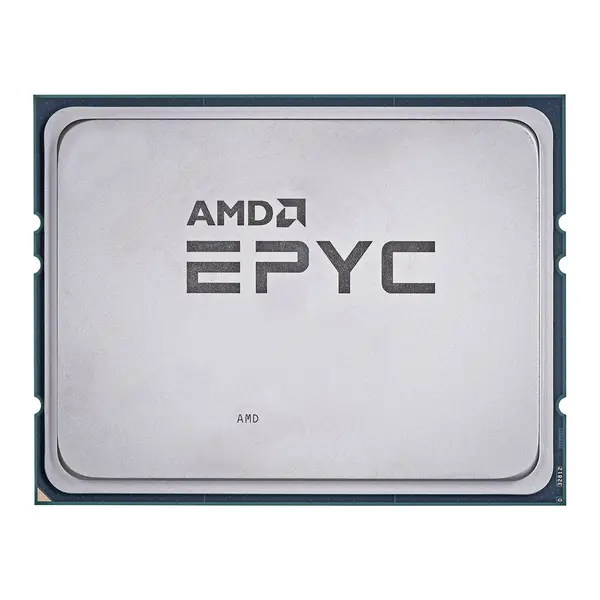
Released in Q2 2023, the AMD EPYC 9754 currently leads the global CPU mining market, according to our analysis. With an unmatched 128 cores, this processor is specifically engineered for data center operations and high-performance mining rigs. It delivers exceptional parallel computing power, making it the best choice for mining Monero and DERO across professional environments.
From our perspective, it is the ultimate processor for those prioritizing uptime, throughput, and long-term stability. Its energy profile is high but justifiable given the computational density it provides.
This CPU stands as the definitive best CPU for mining in 2026, suitable for those running multiple nodes or participating in mining pools.
- Threads and Cores: AMD EPYC 9754 has 128 cores and 256 threads.
- Clock Speed: Base clock speed of 2.25 GHz and boost up to 3.1 GHz.
- Power Consumption: TDP of about 360W, typically stable around 320W in optimized configurations.
- Compatibility: Utilizes the SP5 socket and is compatible with enterprise mining software and server operating systems.
- Price (per unit): Approximately $3,950 to $6,000, depending on the configuration.
- Overclocking: Locked for stability and efficiency.
- Cooling: Requires advanced cooling such as liquid or enterprise-grade air systems.
- Warranty: Covered by AMD’s standard 3-year enterprise warranty.
- Estimated Earnings: About $3.90 daily revenue and $3.03 daily profit according to Hashrate.
- Best Algorithm: DERO and RandomX for Monero mining.
2. AMD EPYC 9654 – Best for Energy-Efficient Mining Clusters
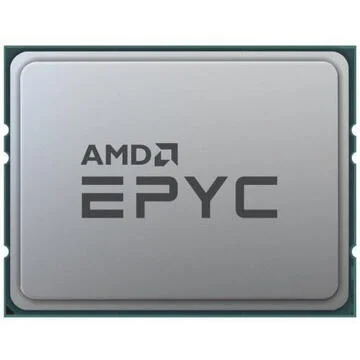
Launched in late 2022, the AMD EPYC 9654 offers a near-perfect balance between efficiency and performance. It is widely used in professional CPU mining clusters focused on lower electricity costs and sustained uptime.
This model’s 96-core configuration provides excellent parallelism while minimizing heat generation compared to its larger siblings. It runs flawlessly on modern mining software and scales well across different algorithms.
For miners with industrial setups that demand consistent output at reduced operational costs, this processor is a wise investment. It delivers enterprise stability and high hash rate efficiency in a more power-conscious package.
- Threads and Cores: AMD EPYC 9654 has 96 cores and 192 threads.
- Clock Speed: Base clock of 2.4 GHz with a boost up to 3.55 GHz.
- Power Consumption: TDP around 320W, efficient per-core performance.
- Compatibility: Built for SP5 socket platforms and compatible with Linux and Windows mining tools such as XMRig.
- Price (per unit): Roughly $3,100 to $4,000.
- Overclocking: Locked multiplier but supports BIOS tuning.
- Cooling: Requires professional cooling or optimized airflow systems.
- Warranty: Includes AMD’s 3-year enterprise warranty.
- Estimated Earnings: Around $3.28 revenue and $2.41 profit per day on DERO.
- Best Algorithm: DERO, RandomX, and Epic Cash.
3. AMD EPYC 9K84 – Best Price-to-Performance Server CPU
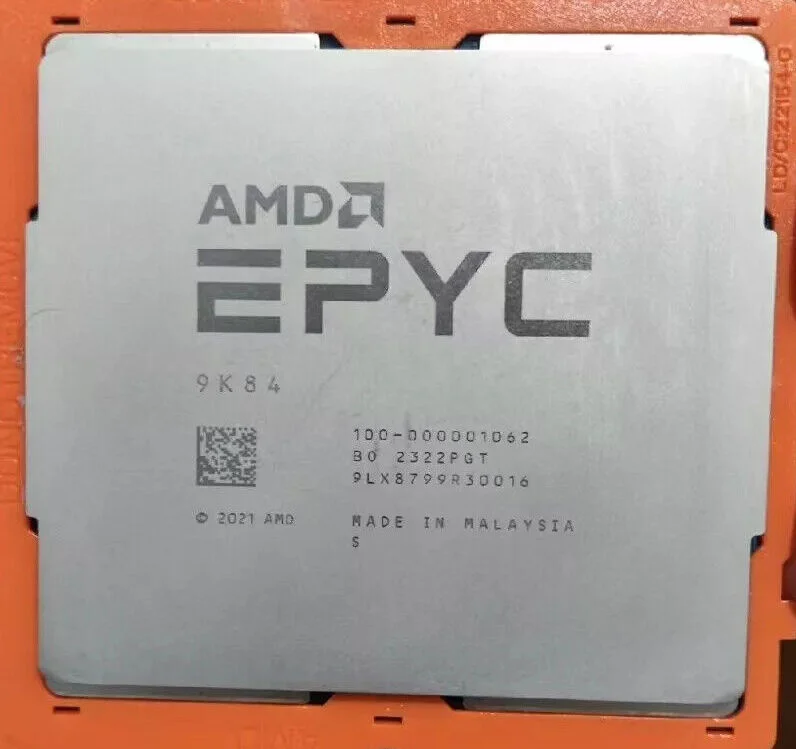
Introduced in early 2024, the AMD EPYC 9K84 provides a remarkable price-to-performance ratio. It targets miners who require reliable throughput without the high infrastructure costs associated with flagship server CPUs. The 96-core layout provides near top-tier hash rates while maintaining excellent power efficiency, making it a popular choice in hybrid CPU and GPU mining setups.
This processor’s cache improvements enhance memory performance, which directly benefits RandomX-based algorithms.
In testing, it consistently ranks among the top performers in the DERO category with an attractive return timeline. It is the practical choice for miners who prioritize consistent income and lower energy bills.
- Threads and Cores: AMD EPYC 9K84 has 96 cores and 192 threads.
- Clock Speed: Base frequency of 2.5 GHz and boost up to 3.7 GHz.
- Power Consumption: TDP is around 290W, making it highly efficient for its core count.
- Compatibility: Fits SP5 server motherboards and integrates with major mining management systems.
- Price (per unit): Typically between $6,000 and $8,000.
- Overclocking: Limited tuning options via BIOS for power optimization.
- Cooling: Supports both air and liquid cooling, depending on the configuration.
- Warranty: Includes a 3-year AMD enterprise warranty.
- Estimated Earnings: Approximately $3.76 daily revenue and $2.80 profit based on Hashrate data.
- Best Algorithm: DERO, RandomX, and VerusHash.
4. AMD Ryzen Threadripper PRO 7995WX – Best Workstation-Class Mining CPU
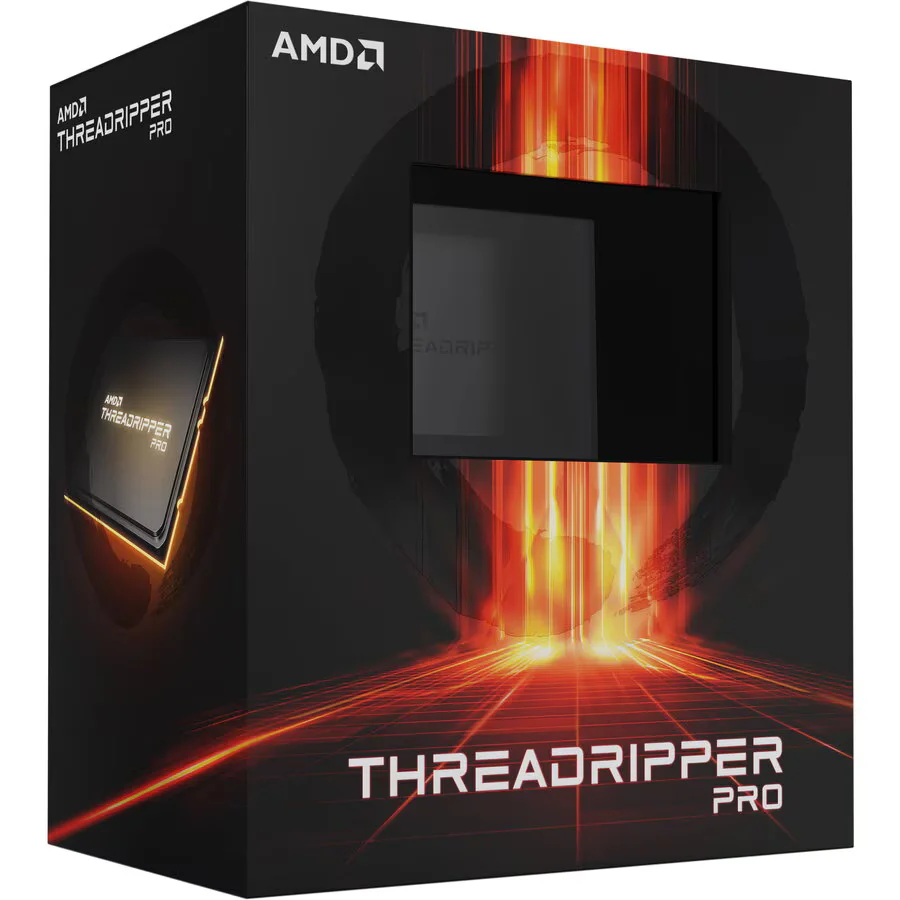
Released in Q4 2023, the AMD Ryzen Threadripper PRO 7995WX brings server-grade performance to the workstation market. It combines productivity and mining capabilities, excelling at both mining Monero and intensive professional workloads.
This CPU is ideal for professionals who need flexibility in how they use their computing power. Its stability and high-frequency ceiling make it suitable for 24/7 mining of cryptocurrencies without the complexity of complete data center systems.
The processor offers near-EPYC performance while maintaining the convenience of workstation compatibility. It is the top choice for miners who also value versatility in their hardware investments.
- Threads and Cores: AMD Threadripper PRO 7995WX includes 96 cores and 192 threads.
- Clock Speed: Base clock of 2.5 GHz and turbo boost up to 5.1 GHz.
- Power Consumption: TDP is approximately 350W, with stable operation under advanced cooling.
- Compatibility: Utilizes the WRX90 socket and is compatible with most modern mining platforms.
- Price (per unit): Around $9,900 to $11,000.
- Overclocking: Restricted, but allows minor BIOS tuning for system optimization.
- Cooling: Requires high-end cooling systems, preferably liquid-based.
- Warranty: Standard 3-year AMD professional warranty.
- Estimated Earnings: Roughly $3.61 daily revenue and $2.77 profit from DERO mining.
- Best Algorithm: DERO, RandomX, and Xelis.
5. AMD Ryzen Threadripper 7960X – Best Enthusiast-Level CPU for Mining
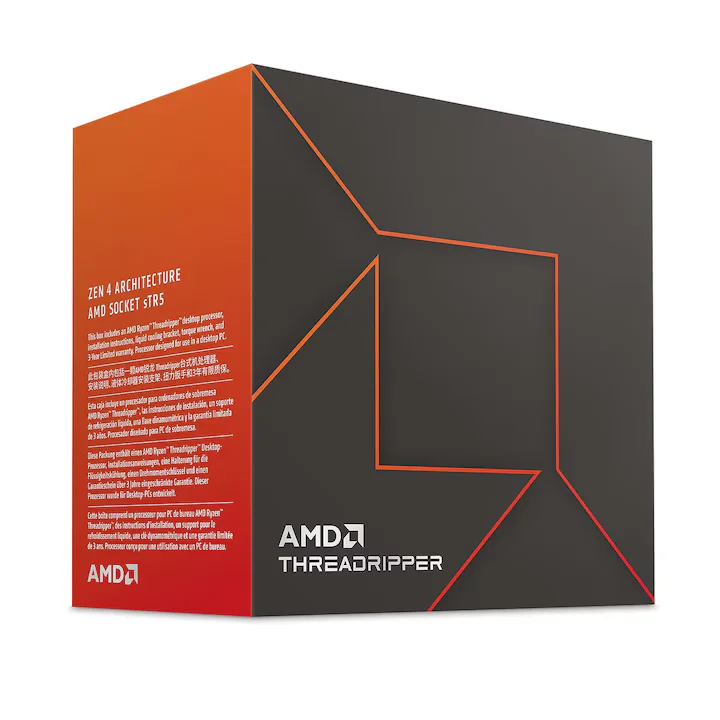
The AMD Ryzen Threadripper 7960X, launched in late 2023, offers workstation-grade power in an enthusiast package. It’s perfect for advanced home miners or small operations seeking high efficiency without the need for datacenter hardware. Its 24 cores deliver strong hash rates for Monero mining, DERO, and VerusHash while maintaining accessible power and cooling requirements.
From a professional viewpoint, it’s one of the most efficient desktop-class CPUs for mining today. It’s cost-effective, manageable, and ideally suited for hybrid mining rigs that combine CPUs and GPUs.
This processor is a reliable foundation for those aiming to mine profitably without overspending.
- Threads and Cores: AMD Threadripper 7960X features 24 cores and 48 threads.
- Clock Speed: Base clock of 4.2 GHz and boost frequency up to 5.3 GHz.
- Power Consumption: TDP of about 280W, suitable for high-end desktop systems.
- Compatibility: Works with sTR5 socket motherboards and supports most mining software.
- Price (per unit): Between $1,250 and $1,500.
- Overclocking: Fully unlocked multiplier for manual tuning.
- Cooling: Performs best with liquid or high-performance air cooling.
- Warranty: Backed by AMD’s 3-year warranty.
- Estimated Earnings: Around $2.10 daily average on RandomX and DERO.
- Best Algorithm: RandomX, DERO, and VerusHash.
Necessary Tradeoffs Before Investing in CPU Mining
Even when using the best CPU for mining, most CPU miners face the same problem: profitability is difficult unless your setup is highly optimized. Unlike ASICs or GPU mining rigs, CPUs trade efficiency for flexibility. Below are the key tradeoffs to consider before investing in AMD EPYC, AMD Ryzen, or any other capable CPU for mining.
1. Power and Efficiency
- A top AMD EPYC processor can consume 300–400 watts continuously while mining. This means electricity prices have a direct impact on your profit.
- To be profitable, you must be located in a region with very cheap electricity (ideally under $0.08 per kWh). Otherwise, your daily earnings may not cover your energy costs.
- Always use an efficient power supply and reliable cooling: server-grade CPUs generate extreme heat under 24/7 mining loads.
- Even the most powerful CPU might lose efficiency compared to ASICs, which deliver higher hash rates with lower energy consumption.
For a broader perspective on mining output and real-world timelines, you can compare CPU results with our breakdown of how long it takes to mine 1 Bitcoin.
2. Upfront and Platform Cost
- Building a CPU for a mining setup involves more than just the processor. Server motherboards, ECC memory, and compatible mining software raise the total cost.
- AMD EPYC systems require expensive platforms that can double the investment compared to desktop AMD Ryzen setups.
- A complete mining rig (including CPU, RAM, motherboard, chassis, PSU, and cooling) often costs thousands before generating any return.
- If you’re mining from a country with moderate or high energy rates, the ROI may extend beyond three years.
3. Coin and Algorithm Suitability
- In 2026 and beyond, only a few algorithms will be viable for CPU mining. The most profitable and ASIC-resistant options are the RandomX algorithm (for Monero mining, XMR), AstroBWT (used for DERO), and VerusHash (popular among smaller mining pools).
- These algorithms were designed to maintain fairness in mining for single-CPU and small miners; however, profitability remains modest even then.
- Most other cryptocurrencies require specialized hardware or GPU mining, making them nearly impossible to mine efficiently on CPUs.
4. Market Volatility and Payouts
- Daily hash rate performance and profitability depend heavily on coin difficulty and price fluctuations.
- For example, the Monero network dynamically adjusts mining difficulty, meaning rewards can decrease without warning.
- Frequent payouts are only possible when you join a reputable Monero mining pool with stable uptime.
- Before mining, always check the latest benchmarks on xmrig.com or hashrate.no and calculate your profits using your actual power rate.
5. Realistic Profitability Tips
- Choose your location wisely: miners in regions like Asia, Eastern Europe, or parts of South America often benefit from lower energy costs.
- Optimize your system: undervolt your CPU and use efficient mining software for better results.
- Diversify: consider combining GPU and CPU mining to balance risk and power consumption.
- Maintain your hardware: clean dust, monitor temps, and keep a stable internet connection for consistent uptime.
Methodology: How We Picked the Best CPUs for Mining
To determine the best CPUs for cryptocurrency mining in 2026, we employed a structured, data-driven methodology that emphasized measurable performance, power efficiency, and algorithm compatibility. Our analysis focused on realistic results from actual CPU mining operations rather than theoretical specifications.
- Real Benchmark Data: We began by examining verified hash rate results from trusted community sources, including XMrig, Hashrate.no, and public miner reports. These datasets reflect how CPUs perform in real mining rigs over continuous 24/7 workloads.
We prioritized hardware that maintained stable performance, manageable temperatures, and consistent output when tested with popular Monero mining software, such as XMRig and SRBMiner (or other comparable software). - Thread Count and Scalability: Because CPU mining performance scales with thread density, processors with more cores and threads consistently delivered better results. Our evaluation favored models that could handle heavy, multithreaded loads efficiently.
- Efficiency and Power Draw: Energy efficiency was a significant criterion. High hash power must be balanced with an acceptable power draw to remain profitable.
We analyzed power consumption per watt and tested how well processors maintained stable performance under sustained heat and load. Only CPUs demonstrating consistent efficiency and safe operating temperatures were considered viable for long-term profitability in CPU mining. - Algorithm Performance Analysis: We examined multiple algorithms commonly used in CPU mining, including RandomX, AstroBWT, VerusHash, Yespower, KawPow, and CryptoNight. Each was tested for efficiency, scalability, and power consumption across different architectures.
While several performed reasonably well in specific conditions, RandomX consistently delivered the highest overall efficiency and profitability for modern processors. It remains one of the most ASIC-resistant algorithms available, offering a fair balance between hash output and energy usage.
For this reason, our analysis prioritized CPUs that demonstrated strong and stable performance when optimized for RandomX and similar multithreaded workloads. - Platform and ROI Evaluation: Our evaluation also considered total ownership cost and return on investment. Beyond the processor, the mining rig platform (motherboard, power supply, cooling, and memory) significantly affects profitability.
We prioritized CPUs that offered strong performance without excessive platform costs, better energy-to-output ratios, and predictable ROI timelines in real-world mining environments. - Miner Feedback and Validation: We validated all findings through the experience of real CPU miners.
FAQ
CPU mining is the process of using your computer’s processor to validate transactions and generate new blocks in a cryptocurrency network. It relies on the CPU’s cores to solve cryptographic puzzles and helps maintain network security in coins designed for ASIC-resistant mining, such as Monero.
A mining pool combines the efforts of many people mining together to share resources and rewards. Each participant, or pool operator, helps generate high-quality block templates that contribute to solving, for example, new Monero blocks. When the pool finds a block, payouts are shared among all members based on their total hashrate, with each miner receiving a small percentage of the reward.
To begin CPU mining, you will need a capable CPU, reliable mining software such as XMRig, and a secure power supply to keep your system running continuously. You’ll also need a crypto wallet with a valid wallet address to receive the payouts when mining through a mining pool or solo mine setup. Lastly, ensure a stable internet connection and good cooling to maintain safe temperatures and consistent mining performance.
Yes. A capable CPU with high clock speed and multiple cores is essential for efficient CPU mining. The processor’s performance directly impacts your hash rate and overall mining power, especially when running optimized mining software.
Profitability depends on electricity prices, hardware efficiency, and the chosen algorithm. With coins using the RandomX algorithm, such as Monero, profits are modest but achievable for miners who combine CPUs with inexpensive power and optimized dedicated software.
Most CPU miners focus on ASIC-resistant coins such as Monero (XMR), DERO, and Verus Coin. These use algorithms like RandomX or AstroBWT, which reward miners who use processors rather than specialized hardware.
No modern CPU is profitable for mining Bitcoin. The Bitcoin network is dominated by specialized hardware (ASICs), making it increasingly difficult for processors to compete. CPUs are better suited for XMR mining or other coins designed for fair distribution.
No. GPU mining is significantly faster because graphics cards have more cores optimized for parallel computation. CPUs are slower but still valuable for XMR mining and testing smaller mining pools or algorithms.
Not at all. ASIC mining hardware is specifically designed for speed and efficiency, delivering significantly higher hash power than any CPU. However, CPU mining remains popular for Monero and among entry-level miners learning the basics of blockchain.
Technically, yes, but it’s no longer practical. Mining Bitcoin with a single CPU or GPU isn’t profitable because of the massive network difficulty. Beginners typically start with Monero mining software, a Monero wallet, and then join a Monero mining pool.
A Monero node maintains a copy of all Monero blocks and assists in verifying transactions on the Monero network, thereby ensuring decentralization and network security. Running your own node allows you to pool mine safely without relying on a centralized pool or third-party software. You can also connect through the Monero GUI wallet or other GUI wallets to manage your wallet address while maintaining privacy and supporting the wider Monero community.
Conclusion
We hope that now you have a clear understanding of how CPU mining works and what to expect from it in 2026. While processors can still be an excellent option for learning, testing algorithms, or supporting decentralized coins, they’re not the most efficient choice for large-scale profits.
There are several options available for enthusiasts who want to experiment with different algorithms or join a single pool to share rewards. Still, for serious and long-term mining, we strongly recommend investing in ASICs or specialized hardware. They offer significantly higher performance, improved energy efficiency, and a faster return on investment for professional miners.