Best Apps for Crypto in 2026: Top 5 Trading & Portfolio Tools
Choosing the best crypto apps in 2026 is a strategic move, not just a quick download. The crypto market is crowded with exchanges, trading platforms, digital wallets, and portfolio-tracking tools, and not all of them offer the same value. Some platforms compete on low fees. Others focus on advanced trading tools, staking rewards, or full […]
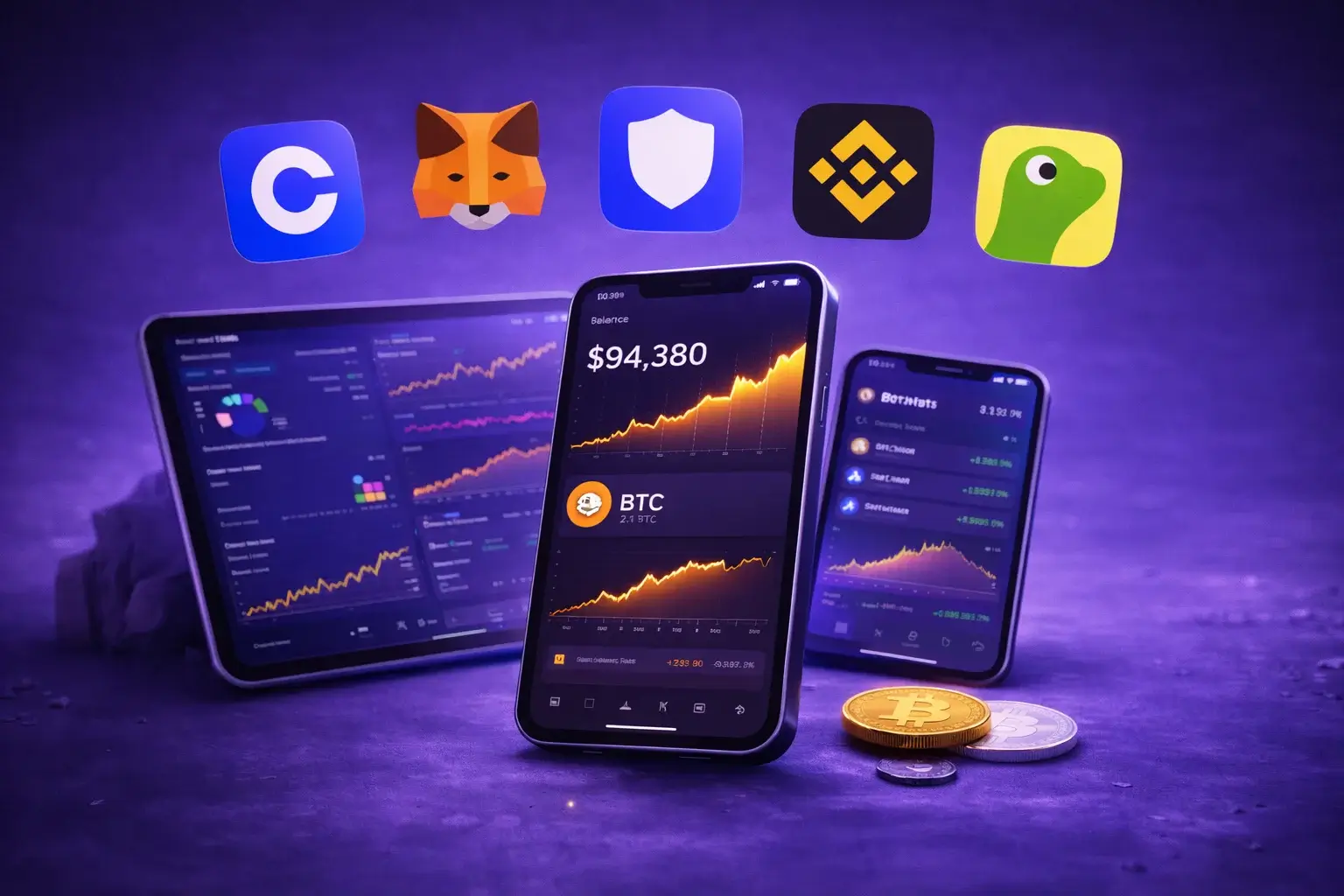
Choosing the best crypto apps in 2026 is a strategic move, not just a quick download. The crypto market is crowded with exchanges, trading platforms, digital wallets, and portfolio-tracking tools, and not all of them offer the same value.
Some platforms compete on low fees. Others focus on advanced trading tools, staking rewards, or full control through private keys. These differences affect how you trade digital assets, manage crypto holdings, and protect your funds.
To simplify your decision, we evaluated five leading crypto apps based on security, supported cryptocurrencies, key features, and real user feedback.
Whether you’re new to crypto or an experienced trader looking for advanced charting tools, this guide helps you find the platform that fits your strategy.
Top 5 Apps for Crypto: Quick Comparison
| App | Specifications |
|---|---|
| Coinbase | Type: Centralized crypto exchange; Key Strength: Fiat on-ramp, simple UI, staking, mobile app; Supported Cryptocurrencies: 200+; Fees: Medium; Security Level: Very High (regulated, cold storage). |
| CoinStats | Type: Portfolio tracker; Key Strength: Real-time portfolio tracking, DeFi & NFT tracking, P&L analytics, smart alerts; Supported Cryptocurrencies: 300+ integrations (exchanges & wallets); Fees: Free + Premium; Security Level: High (API-based, non-custodial tracking). |
| MetaMask | Type: Decentralized wallet; Key Strength: Self-custody wallet, dApp browser, token swaps; Supported Cryptocurrencies: Multi-chain (Ethereum, L2s, BSC, Polygon) Fees: Network fees; Security Level: High (self-custody). |
| CoinGecko | Type: Market data platform; Key Strength: Token discovery, rankings, historical data, on-chain metrics; Supported Cryptocurrencies: 10,000+ tokens tracked; Fees: Free; Security Level: High. |
| TradingView | Type: Trading & analysis platform; Key Strength: Professional charting, indicators, strategy testing, alerts; Supported Cryptocurrencies: Integrates with major crypto exchanges; Fees: Free + Pro; Security Level: High. |
1. Coinbase, Best for Beginners Entering Crypto Safely
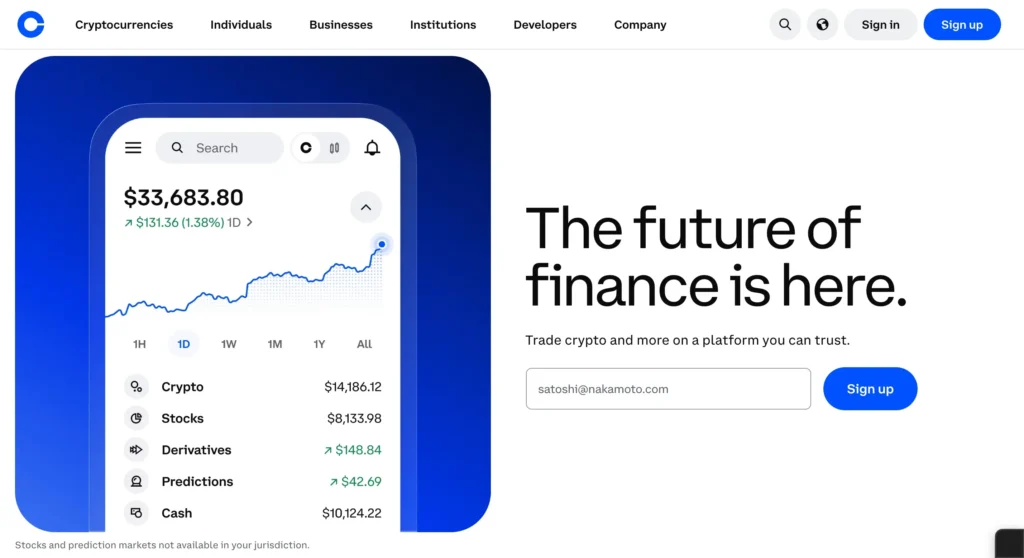
Coinbase is one of the most established centralized crypto exchanges and a common entry point for new investors. It allows users to buy, sell, and hold digital assets using fiat money through bank transfers, debit cards, and wire deposits.
The platform stands out for its clean, intuitive interface. Users can execute simple market orders with just a few taps, while more experienced traders can switch to Coinbase Advanced for lower trading fees, deeper liquidity, and more sophisticated order types.
Security remains one of Coinbase’s strongest advantages. The majority of customer funds are stored in cold storage, and accounts are protected by two-factor authentication (2FA) and additional verification layers.
Reviews & User Feedback
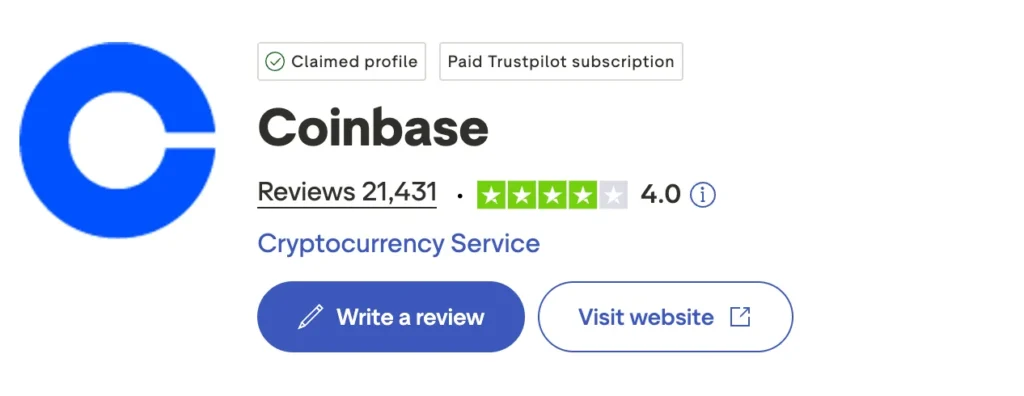
On Trustpilot, Coinbase holds a rating of 4.0 out of 5 based on more than 21,000 reviews, reflecting a broad mix of user experiences. Positive reviews frequently highlight the platform’s clean interface, ease of use, and straightforward crypto transactions.
Many beginners say Coinbase makes it easy to deposit funds, buy digital assets, and manage crypto holdings without advanced technical knowledge. Users also often cite security measures and regulatory transparency as key factors in building trust.
At the same time, some reviews highlight challenges with account verification, temporary account restrictions, and customer support response times. These concerns are common across many centralized crypto exchanges operating under strict compliance frameworks.
2. CoinStats, Best for Portfolio Tracking & Crypto Analytics
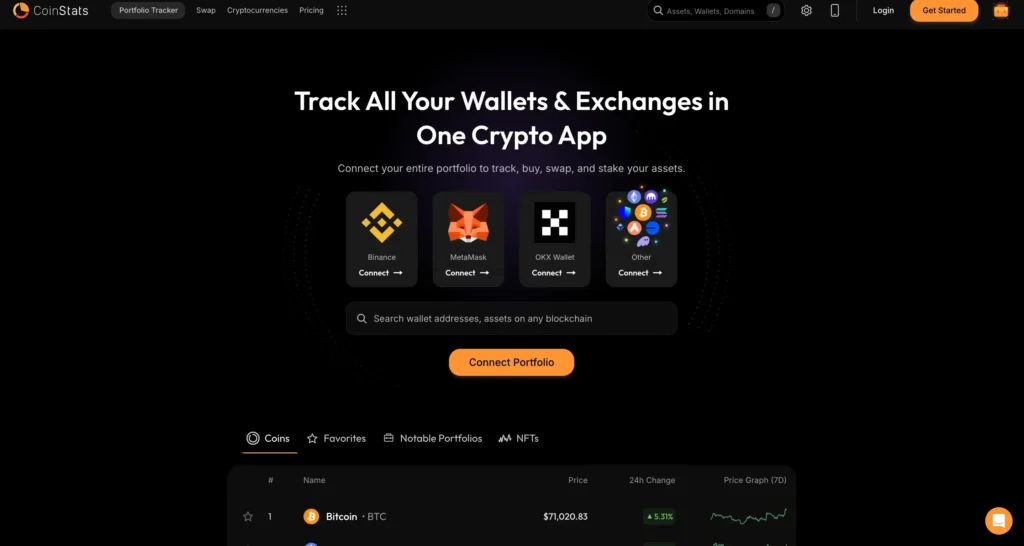
The CoinStats crypto tracker connects to 300+ exchanges and wallets via secure APIs, enabling users to monitor all their crypto holdings in a single dashboard. Instead of logging into different apps, users can view balances, transaction history, and performance metrics in real time.
Beyond simple balance tracking, CoinStats provides advanced portfolio analytics. Users can track profit and loss, asset allocation, historical performance, and staking rewards across different platforms.
The app also supports NFT tracking and DeFi integrations, making it useful for investors managing diversified digital assets across centralized and decentralized environments.
Reviews & User Feedback
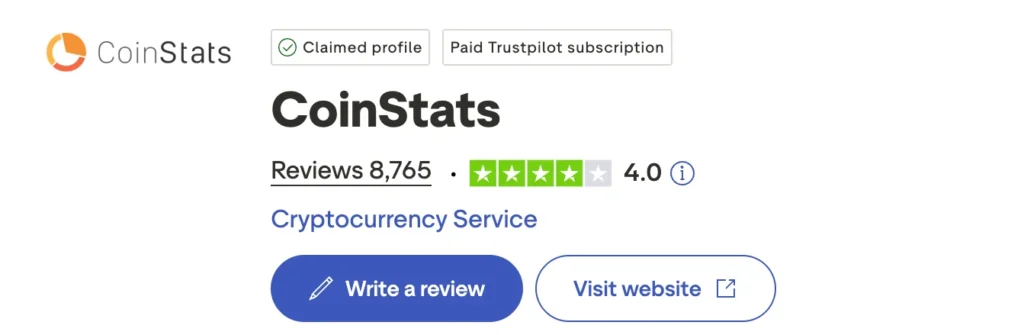
CoinStats has built a solid reputation among crypto investors, reflected in its 4.0 out of 5 rating based on 8,765 reviews on Trustpilot. Overall sentiment is positive, with many users praising the platform’s ability to consolidate crypto holdings from multiple exchanges and wallets into a single, easy-to-use dashboard.
Some critical feedback mentions occasional syncing delays with certain exchange integrations and concerns about premium pricing. Despite this, the consensus is that CoinStats is a reliable portfolio-tracking tool trusted by both beginner and experienced crypto users.
If portfolio tracking is your main priority, explore our guide to the best crypto portfolio tracker apps in 2026 to compare specialized tools, advanced analytics features, and pricing in more detail.
For a more in-depth analysis, see also our CoinStats vs CoinTracker review.
3. MetaMask, Best for DeFi & Web3 Access

MetaMask is one of the most popular decentralized wallets and a key gateway to the Web3 ecosystem. It supports multiple networks, including Ethereum, Layer 2 solutions, Binance Smart Chain, and Polygon. Users can swap tokens, connect to dApps, and participate in staking or governance without relying on a centralized intermediary.
Because MetaMask is non-custodial, security depends on how well users protect their private keys. It offers encrypted storage and hardware wallet integration, but there is no recovery option if access credentials are lost.
Reviews & User Feedback
MetaMask has a 4.4 out of 5 rating on G2, based on 43 reviews, reflecting strong satisfaction among users familiar with decentralized finance and Web3 applications.
Positive feedback frequently highlights ease of connecting to decentralized platforms, flexibility across networks, and smooth integration with DeFi tools. Users appreciate the freedom of self-custody and the ability to interact directly with smart contracts.
Critical reviews typically mention occasional network congestion, gas fee fluctuations, and the learning curve associated with managing private keys.
4. CoinGecko, Best for Independent Market Data & Analytics
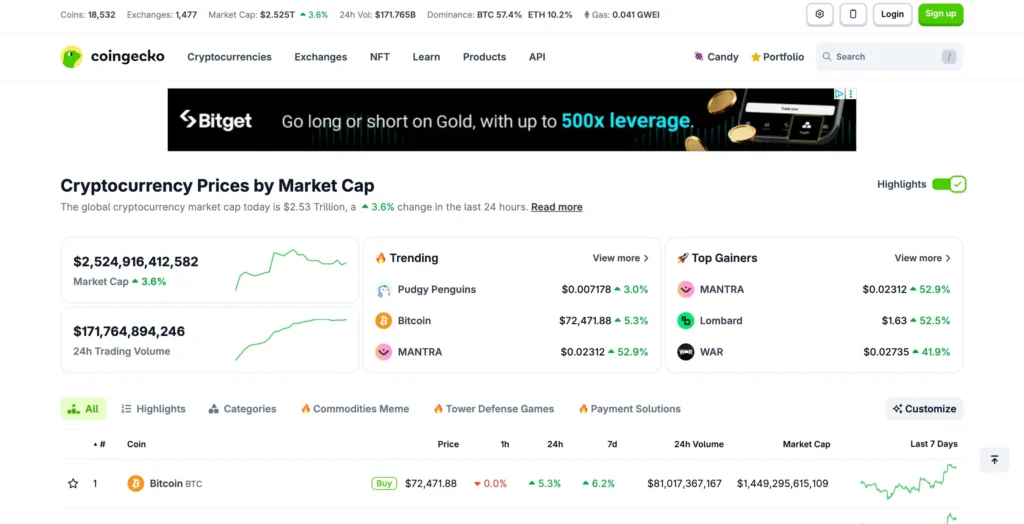
CoinGecko is a leading crypto market data platform used by traders, investors, and crypto enthusiasts who want independent, real-time insights into digital assets. Unlike crypto exchanges, CoinGecko does not facilitate crypto transactions. Instead, it focuses on providing detailed analytics, price tracking, and market intelligence across thousands of cryptocurrencies.
The platform tracks more than 10,000 tokens across multiple blockchain networks. Users can monitor price movements, trading volume, market cap rankings, liquidity metrics, and historical performance data.
For investors researching new tokens or comparing cryptocurrency exchanges, CoinGecko serves as a valuable reference tool.
Reviews & User Feedback
CoinGecko holds a 4.6 out of 5 rating on G2 based on 13 reviews, reflecting strong satisfaction among users who rely on it for independent crypto market data.
Positive feedback frequently highlights the platform’s comprehensive coverage, transparency, and ease of comparing crypto assets. Users appreciate the detailed metrics and unbiased approach to ranking cryptocurrencies.
Some reviews note that while CoinGecko is excellent for research and analytics, it lacks built-in trading functionality, so users must execute trades on separate crypto exchanges.
5. TradingView, Best for Professional Crypto Charting
TradingView is a leading charting and technical analysis platform widely used by crypto traders and financial market participants. It offers professional-grade indicators, drawing tools, custom scripts, and multi-timeframe analysis. Users can monitor trading volume, identify market trends, and build strategies using advanced charting features.
For experienced traders, TradingView supports strategy backtesting and custom alerts, making it a powerful trading companion for active cryptocurrency trading.
Because TradingView connects to multiple crypto platforms, users can analyze price movements across different exchanges without switching between apps. Its clean interface and customizable layouts make it suitable for both intermediate and advanced traders who rely on technical analysis.
Reviews & User Feedback
TradingView has a 4.5 out of 5 rating on G2 based on 74 reviews, showing that many traders and analysts are very satisfied.
Users praise the platform’s advanced charting tools, customizable indicators, and dependable market data. They especially like being able to analyze several crypto assets and track trading volume all in one place.
A few users mention that some advanced features are only available with paid plans, which might limit options for those on a budget.
Methodology on How We Picked the Best Apps for Crypto
The selection process focused on measurable standards, transparency, and verified user feedback, not marketing claims. Each crypto app was evaluated using the criteria below.
- Security Infrastructure & Asset Custody: Security was the top priority. We reviewed cold storage practices, two-factor authentication (2FA), private key control in decentralized wallets, and overall compliance standards. Platforms with strong custody models and transparent risk management ranked higher.
- Cryptocurrency Coverage & Market Access: We compared the number of supported cryptocurrencies, access to major and emerging tokens, and cross-chain functionality. Apps offering broader asset coverage without sacrificing liquidity scored better.
- Trading Infrastructure & Advanced Functionality: Order types, advanced charting tools, liquidity depth, and trading volume stability were analyzed. Platforms that maintained reliable execution during volatile market conditions received stronger evaluations.
- Fee Transparency & Cost Structure: Maker and taker fees, deposit and withdrawal costs, gas fees, and spread models were reviewed. Clear, transparent pricing was prioritized over headline-low-fee claims.
- Portfolio Management & Asset Oversight: We assessed portfolio tracking tools, real-time performance analytics, and multi-platform synchronization. Apps that simplify monitoring crypto holdings ranked higher.
- User Experience & Platform Design: Interface clarity, mobile performance, and onboarding ease were evaluated. Platforms that balance simplicity with advanced features performed best.
- Reputation, Compliance & Independent Validation: Third-party reviews, regulatory posture, transparency reports, and long-term market presence were considered. Platforms with consistent user trust and operational stability ranked higher.
Future Trends in Crypto Apps (2026 & Beyond)
The crypto market continues to evolve rapidly. As digital assets mature and adoption expands, crypto platforms are integrating more advanced features, stronger security measures, and broader financial functionality. Below are the key trends shaping the next generation of crypto apps.
AI-Powered Portfolio Analytics
Artificial intelligence is transforming crypto portfolio management. Modern crypto apps are beginning to use AI-driven analytics to help users:
- Optimize asset allocation;
- Identify market trends;
- Track performance across multiple crypto exchanges.
- Manage risk in volatile market conditions.
For both retail investors and institutional investors, AI enhances portfolio tracking and enables smarter cryptocurrency trading decisions.
On-Chain Intelligence & Advanced Market Insights
On-chain data is becoming more accessible to everyday crypto traders. New crypto trading apps now integrate blockchain analytics directly into their trading platforms. These tools allow users to:
- Monitor trading volume trends;
- Analyze wallet activity;
- Track large crypto transactions;
- Evaluate smart contract interactions.
This level of transparency gives experienced traders deeper insight into crypto assets beyond basic price charts.
Stronger Wallet Security & Self-Custody Tools
Security standards continue to improve across both centralized and decentralized platforms. Future crypto apps are expanding:
- Multi-layer two-factor authentication;
- Biometric logins;
- Hardware wallet integration;
- Multi-signature protection;
- Advanced cold storage solutions.
As self-custody becomes more common, managing private keys securely will remain a core priority for crypto holders.
All-in-One Financial Super Apps
Many crypto platforms are evolving beyond simple buy-and-sell functionality. The next generation of apps offer:
- Spot and derivatives trading;
- Staking rewards;
- Crypto lending;
- Brokerage-style services;
- Integrated digital wallet functionality;
- Seamless bank account connections for fiat money deposits.
These all-in-one ecosystems allow users to manage crypto holdings, transfer crypto, and even sell digital currencies from a single interface.
Tokenized Real-World Assets (RWAs)
Tokenization is expanding beyond cryptocurrencies. Crypto exchanges are beginning to support tokenized stocks, bonds, commodities, and other real-world assets. This integration bridges traditional brokerage accounts and cryptocurrency trading on a single platform.
As tokenized assets grow in market cap, crypto apps will increasingly support hybrid portfolios that combine digital currencies and traditional financial instruments.
Regulation-Driven Transparency & Compliance
Regulatory oversight is shaping the future of crypto trading, cryptocurrency exchanges, and digital asset platforms. Leading crypto platforms now emphasize:
- Clear disclosure of trading fees and other fees;
- Transparent custody models;
- Regular third-party audits;
- Public proof-of-reserves reporting.
Greater transparency builds trust among crypto enthusiasts, institutional investors, and experienced users alike.
FAQ
Yes. Many investors use one crypto trading app for buying and selling, a wallet for self-custody, and a separate crypto portfolio tracker to monitor assets across exchanges.
The safest crypto app is one that implements strong security measures, such as cold storage, 2FA, and regulatory compliance. Decentralized wallets also offer safety through full self-custody.
Centralized crypto exchanges hold your funds and offer easier onboarding. Decentralized crypto apps give you full control through self-custody and on-chain trading.
Yes, but only beginner-friendly crypto trading apps with simple interfaces and educational tools. Advanced platforms may be too complex for new users.
If you use multiple crypto exchanges or wallets, a crypto portfolio tracker helps consolidate balances and track performance in one place.
Conclusion
In 2026, the best crypto apps go beyond transactions: they empower you. In a fast-moving market, your app is your key advantage for control and results. Prioritize apps that offer robust security, clear fee structures, advanced trading capabilities, and dependable portfolio tracking. Actively verify these features before committing to a platform.
Whether you’re new to digital assets or trading across multiple crypto exchanges, your platform directly impacts your results. The right choice protects your crypto holdings, reduces unnecessary costs, and enables smarter, real-time decisions.
Pick a platform built for performance. Test its key features. Move into the next market cycle with clarity and confidence.